Farmers wear lots of different hats. Baseball hats, sun hats, beanies… just kidding! Yes, but I really meant in a metaphorical sense. Sure, we spend lots of time planting, weeding, harvesting, and doing the actual work of farming. There are also the hours spent as amateur soil and plant scientists, diagnosing nutrient deficiencies and prescribing treatments for pest damage. Then, there are the financial analyst days spent pouring over numbers and spreadsheets to make sure the farm can continue to operate. Farmers also act as social media marketers and content creators, human resources managers, construction workers, wannabe meteorologists, and so many more roles. It constantly amazes me how many different skill sets farmers possess.
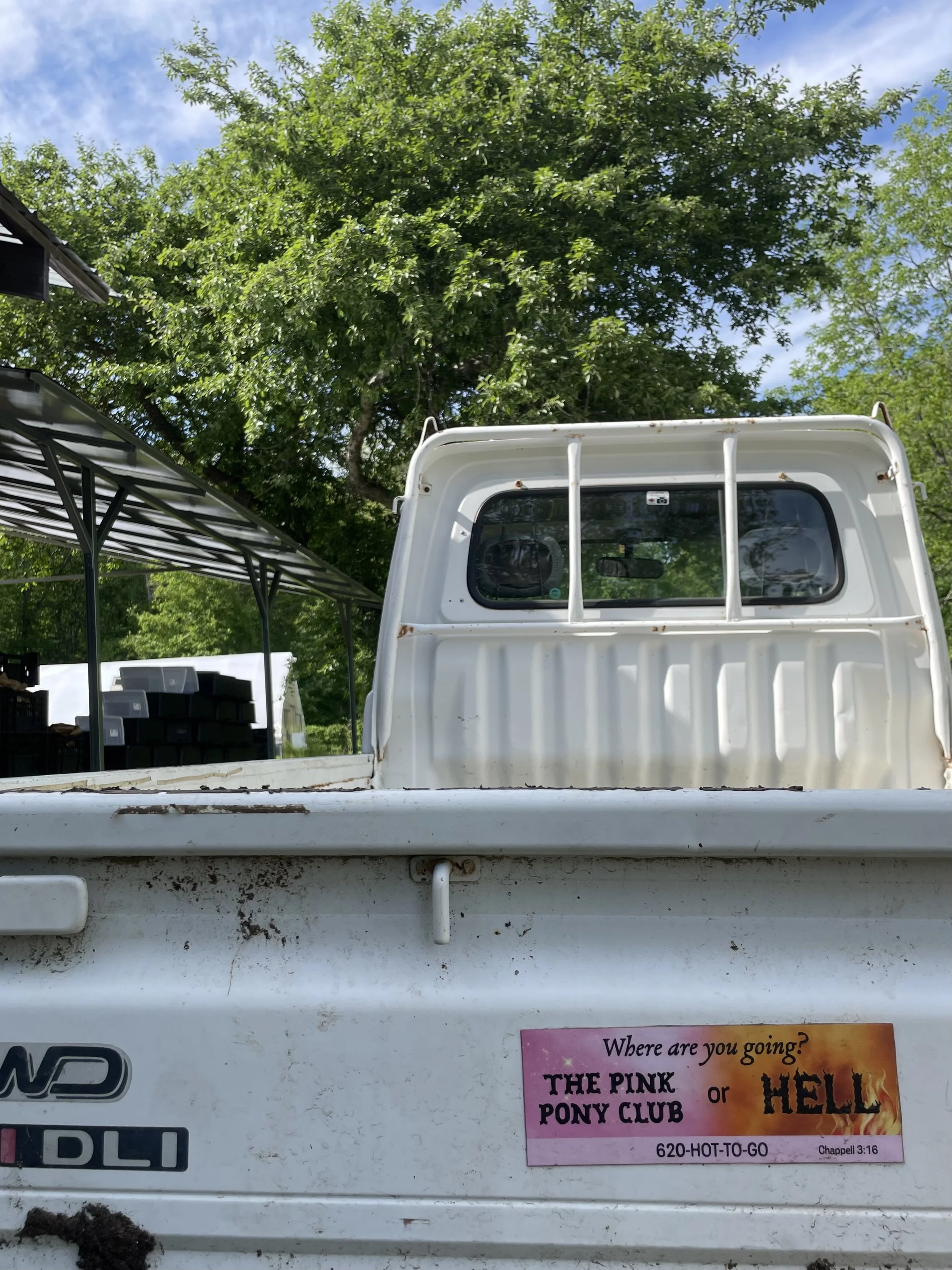
One hat that farmers don all too frequently is that of the mechanic. Even on a mostly hand-scale farm like ours, there is a plethora of equipment. Given that the equipment spends a lot of time out in the elements and works almost as hard as the farmers do, it only makes sense that it breaks down. Luckily, for the FRFarmers, we’re a handy bunch! We (read: Aaron) can often fix machines ourselves.
Only, we didn’t expect to have multiple machines break down at the same time. And break in some major ways.
You may have seen on our Instagram that we acquired a second Japanese mini truck last year! These trucks have great bedspace and are low to the ground, which makes it easy to get crates of food and buckets of flowers in and out of them quickly. (Plus, it’s fun to drive manual sitting on the opposite side of the car.) The first truck worked so well that we decided to get a second one, so Team Vegetables and Team Flowers could each be moving food and flowers around at the same time.

She worked so hard for us! We will miss her!
When the winter’s snow finally melted enough that we could drive around the property again, we started the mini trucks up, ready to be the picture of efficiency this year! … which lasted for about 1 day. Then, our original mini truck abruptly stalled and wouldn’t re-start. After exhausting our own mechanical skills (“Is it out of gas? Should we try to jump it?”), we called in the pros. They informed us that the engine was blown and would need to be replaced, a repair which would cost more than the value of the truck. In summary, our OG mini truck was no more.
So, we’re back down to one truck. It’s ok! We can handle it! When you’re on a cooperatively-owned farm, you get good at sharing. We may be a little less efficient than we hoped, but things can only go up from here.
… and then our mower abruptly stalled and lost steering.
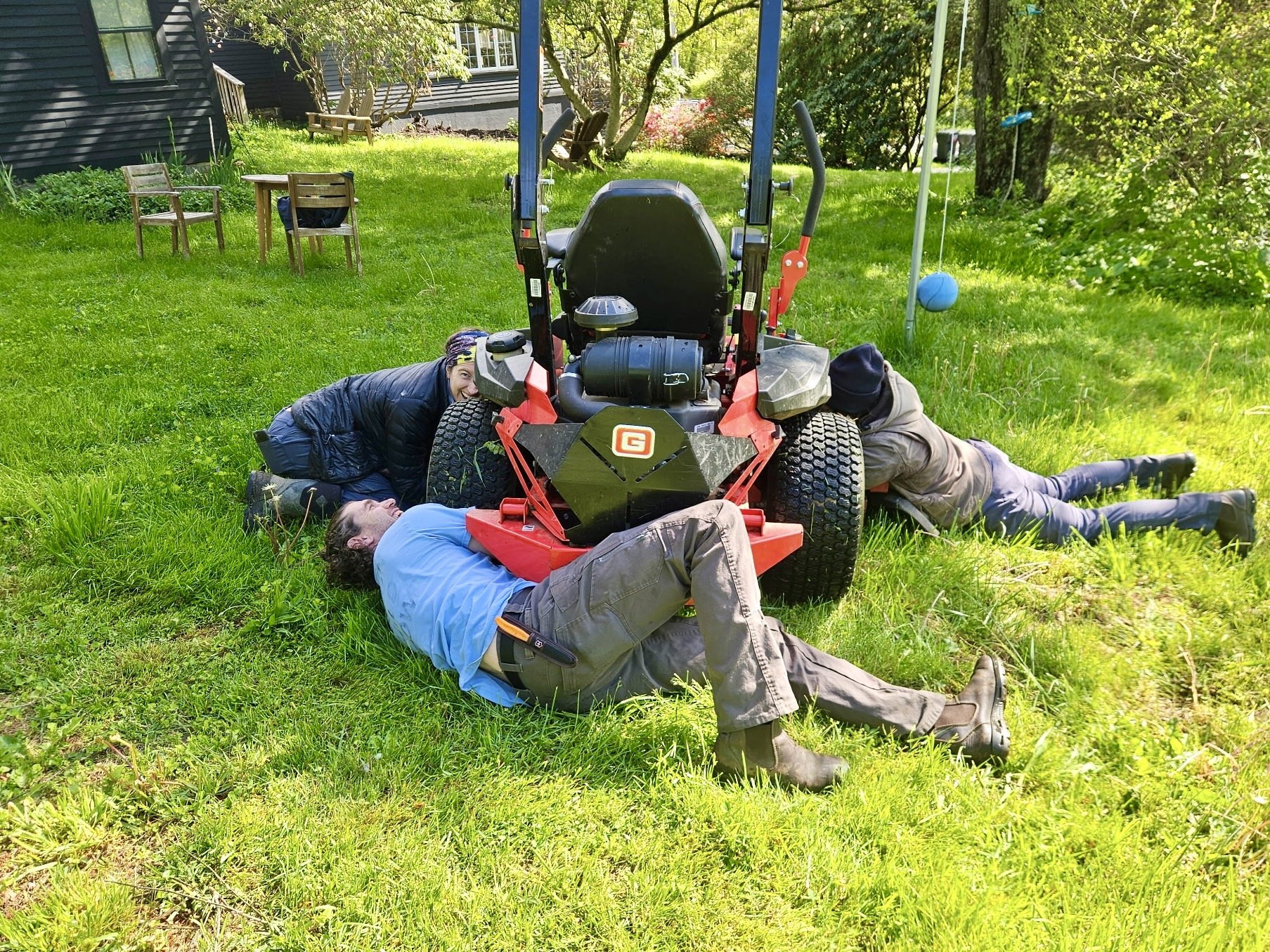
How many people does it take to put a drive belt back in place?
Aaron and his mechanical prowess correctly diagnosed this problem - the drive belt. It had frayed and come off its track. We consulted the pros again, and they informed us that replacing the drive belt is next to impossible without a lift. The mower would need to go into the repair shop.
Aaron, with a few helping hands, was able to shimmy the frayed drive belt back into place, a temporary fix which allowed us to at least drive it out of the field! However, it’s now at the shop while we watch the grass grow taller every day.
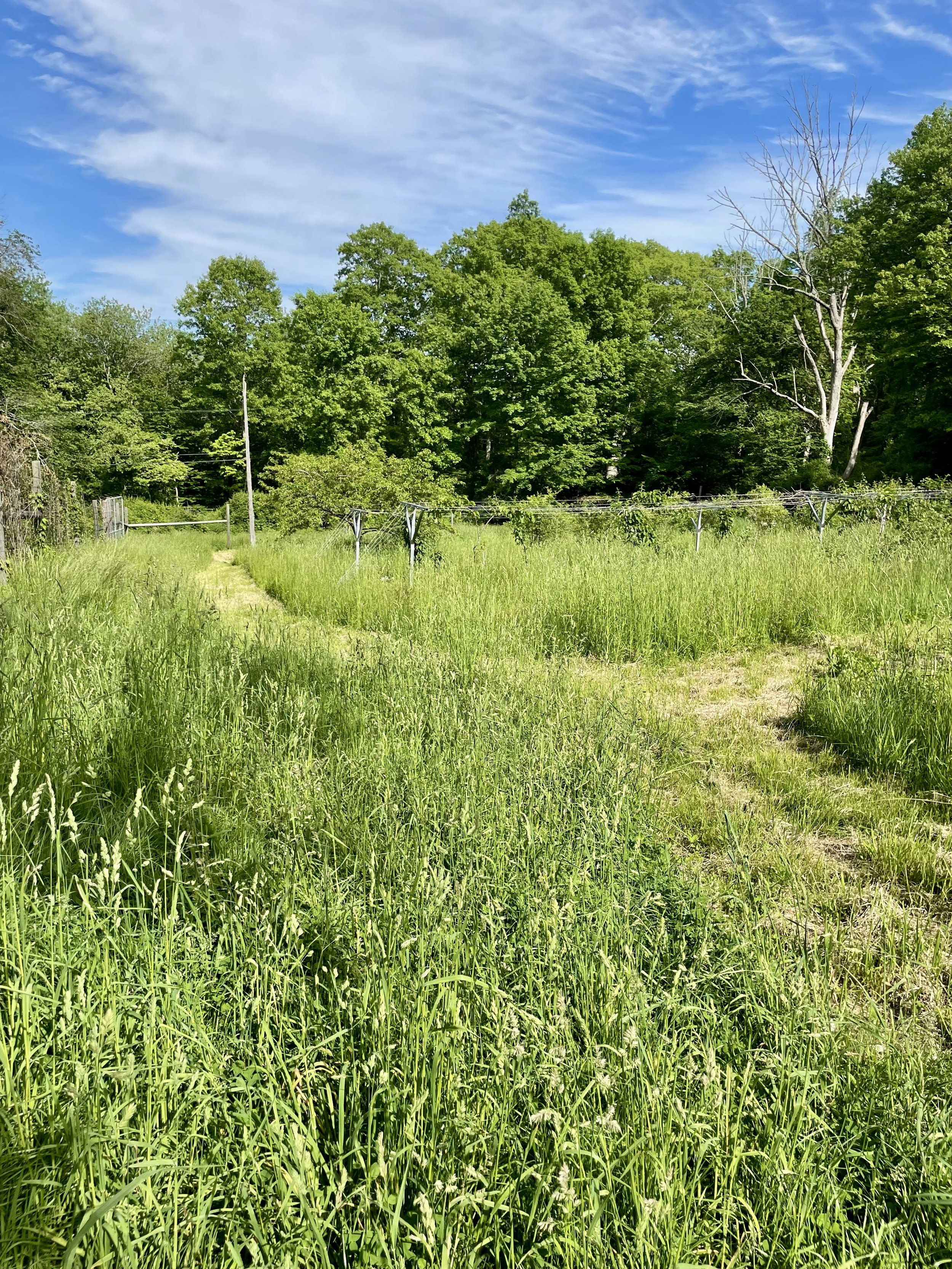
Mowed paths through the orchard to help us get to the rhubarb!
It’s not just that the tall grass is an eyesore. It also provides great shelter for pests - animal and insect alike. Rachel and Elise have stepped in and used a walk-behind mower around the edges of our fields, creating a space between the tall grass and the crops in hopes of keeping the pests at bay until the riding mower is repaired. We’ve been told the mower will be back in action this week, and we’re keeping our fingers crossed!
Things can only go up from here, right!?
-Kiersten