2026

The things we do for tulips

The sun has been shining, the trees are starting to leaf out, and we are in the thick of tulip season. Tulips feel like a quintessential part of the spring season. We see them everywhere this time of year - incorporated into city landscaping, popping up in our neighbors’ gardens - and so, of course, we expect to see them in the farmers’ market stands of our favorite cut flower growers. You drop a bulb in the ground, and they come back year after year, right? How hard could it be?

Oh, the things we do for tulips! These finicky flowers require a lot of behind-the-scenes finagling to get from a bulb to a vase in a process that takes well over a year!

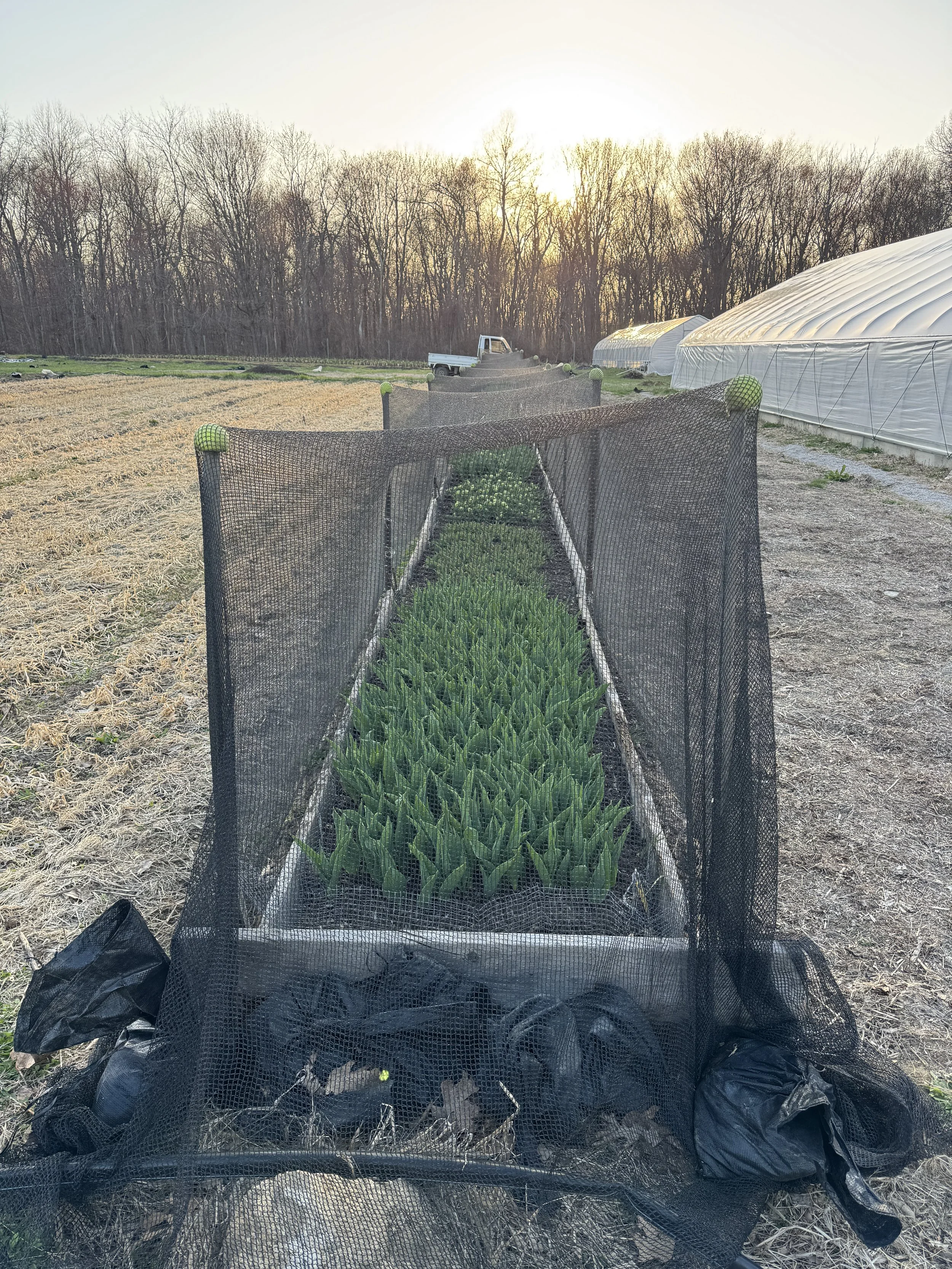
For starters, Elise placed an order for this year’s tulip bulbs in February 2025. (Yep, 2025!) The bulbs arrived at the farm in late October 2025, and, as mentioned in last November’s blog post, we constructed a raised bed and planted the bulbs shortly thereafter. The bulbs sit snugly under a deep layer of compost, so they’re quite protected from the cold. They also sit securely above a layer of hardware cloth, a wire mesh sheet, which protects them from burrowing rodents over the winter.  

For the next 5 months, the bulbs don’t appear to be very active from the surface. However, they’re doing the important work of growing their root systems. During this time, they need careful water management. If underwatered, the bulbs won’t create good roots. If overwatered, the bulbs will rot. We typically set up sprinklers for our tulip bed in December to make sure their soil stays sufficiently damp. 

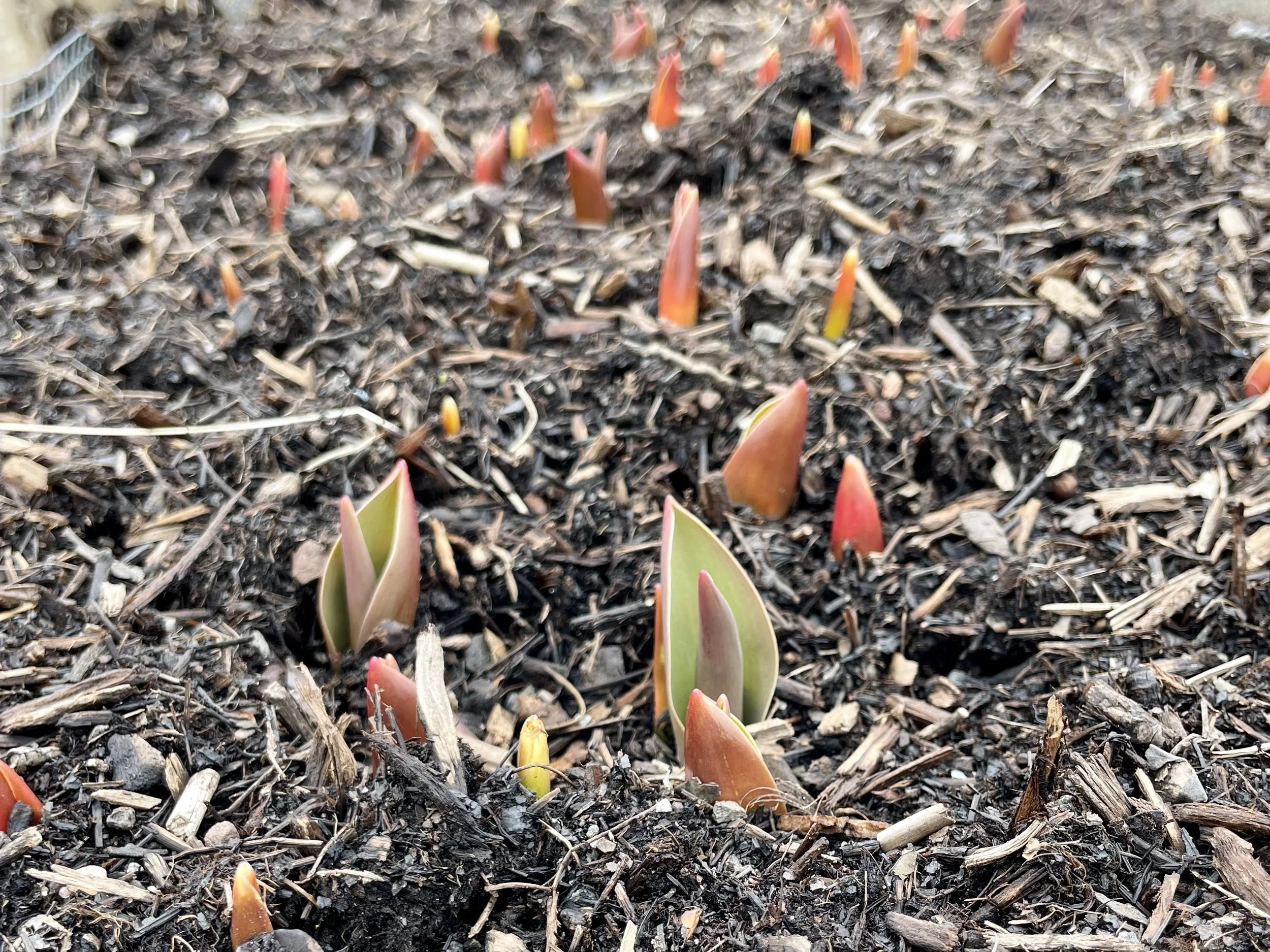
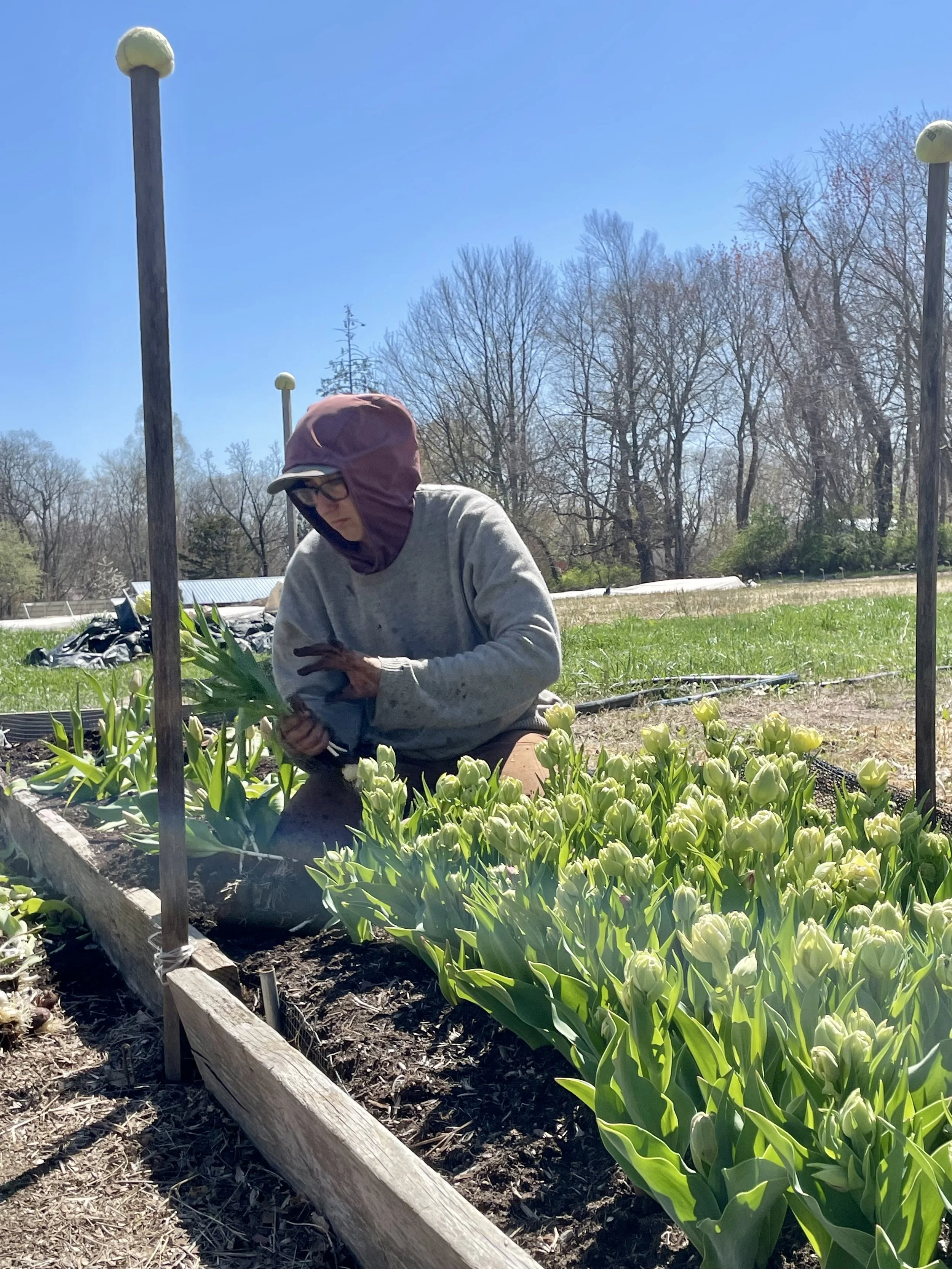
In March 2026, tulips leaves finally began to poke above the surface. Now, we can really watch them grow! We also need to watch the weather though. It seems to be the new normal to have a heat spike each April. This year, we saw three days of over 80 degree temperatures. The extreme heat jumpstarts tulip flowering. Tulips are harvested at “color crack,” which is when color just starts to show at the tip of the flower. The stems store best at this stage. They continue to ripen slowly while stored in the cooler before sale and then have the maximum vase life possible as they open up in the vases in our homes. During those mega-hot days, Elise checked on the tulips many times a day. Even still, sometimes they would pass color crack and open up before she could get to them. The jumpstart into flowering can also cause the tulips to flower too early with short stems or small flower heads. To combat the heat, we pulled shade cloth over the bed to keep the plants slightly cooler. 

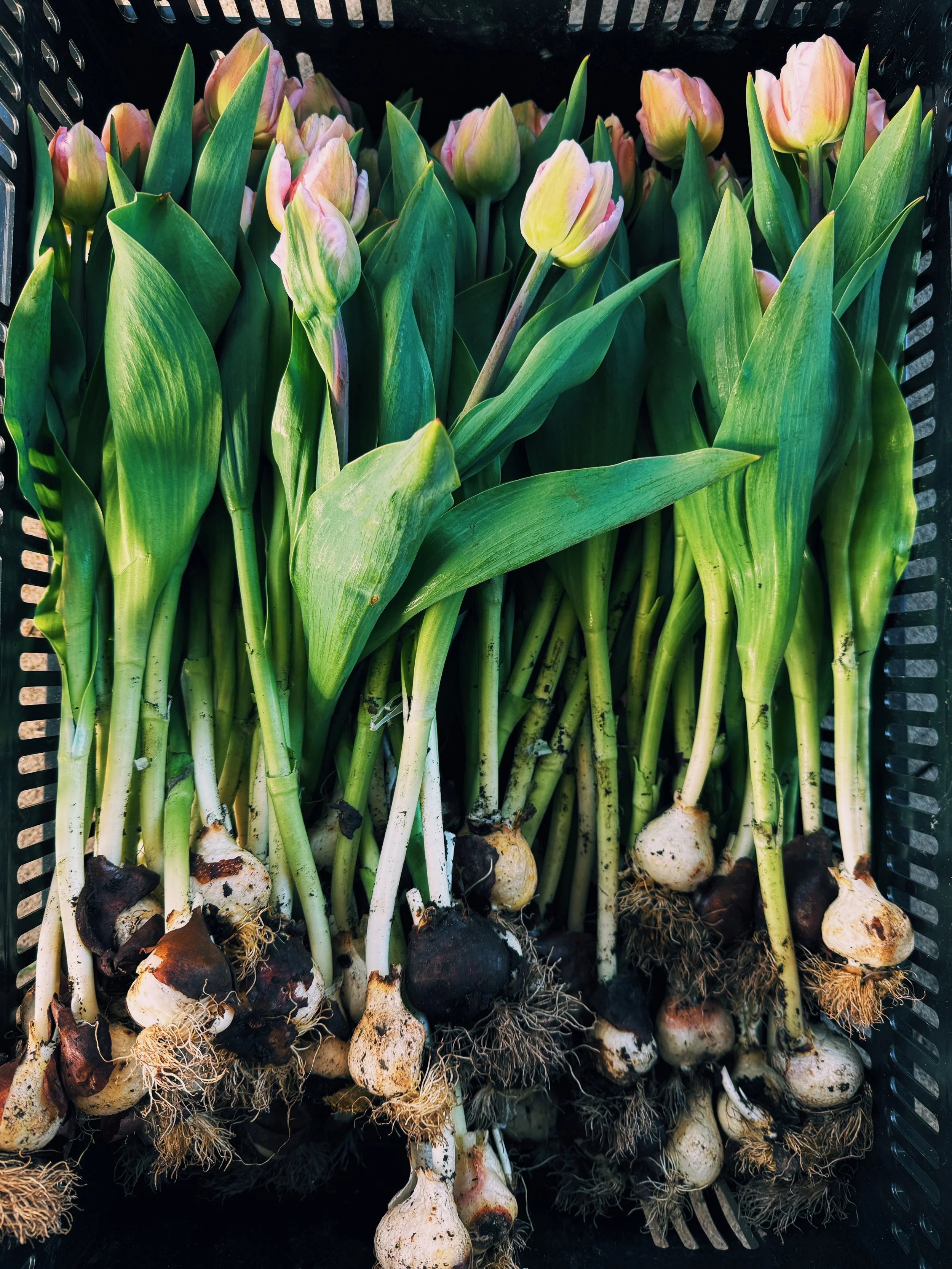
Unfortunately, we don’t leave the bulbs in the ground for more than one season on the farm. They’re very susceptible to disease, and the quality of the flowers would diminish with each subsequent year once disease struck. Furthermore, the amount of space required to grow tulips perennially would quickly become cost-prohibitive because their yield is so much lower than other types of flowers (let’s put a pin in this, I’ll get back to it in a bit!). So, Elise orders new bulbs each year and makes sure to pull the bulbs out with the stem at harvest time.  

If you’re following the timeline, you may have noticed that we harvest tulips in April, but we place an order for next year’s bulbs in February. This means Elise must place her order for 2027 tulips before she’s even seen the 2026 tulips emerge above the ground! It makes trialing new varieties very tricky and very costly. Elise essentially must bet on a variety for two years before seeing how it performs on the farm. 


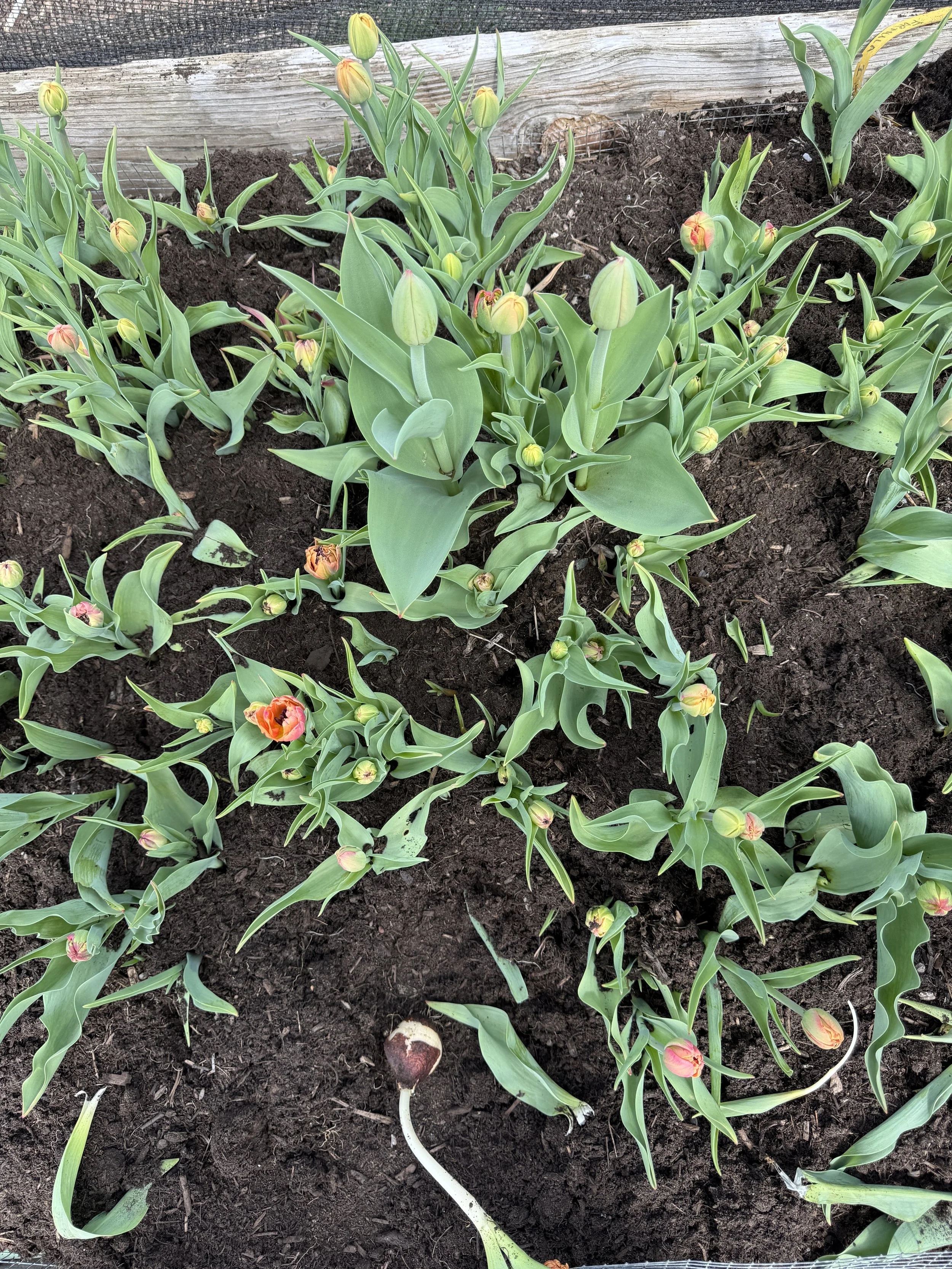
It can be an expensive bet, too. Bulbs are increasingly costly, and this year in particular tariffs added $0.03/bulb or 7.5% to our order cost. Additionally, crop losses are consistently high for tulips. In a normal year, we expect about 30-40% loss, so only 60-70% of the bulbs planted will yield a flower quality enough to sell. Depending on the variety (and the weather that year), losses can easily be higher. In the variety pictured here, we experienced a loss of 75% of the bulbs. When you add it all up - the long time-frame to grow and manage them, the expensive inputs, the high losses - tulips have very low margins. Does it even make sense to grow them?  

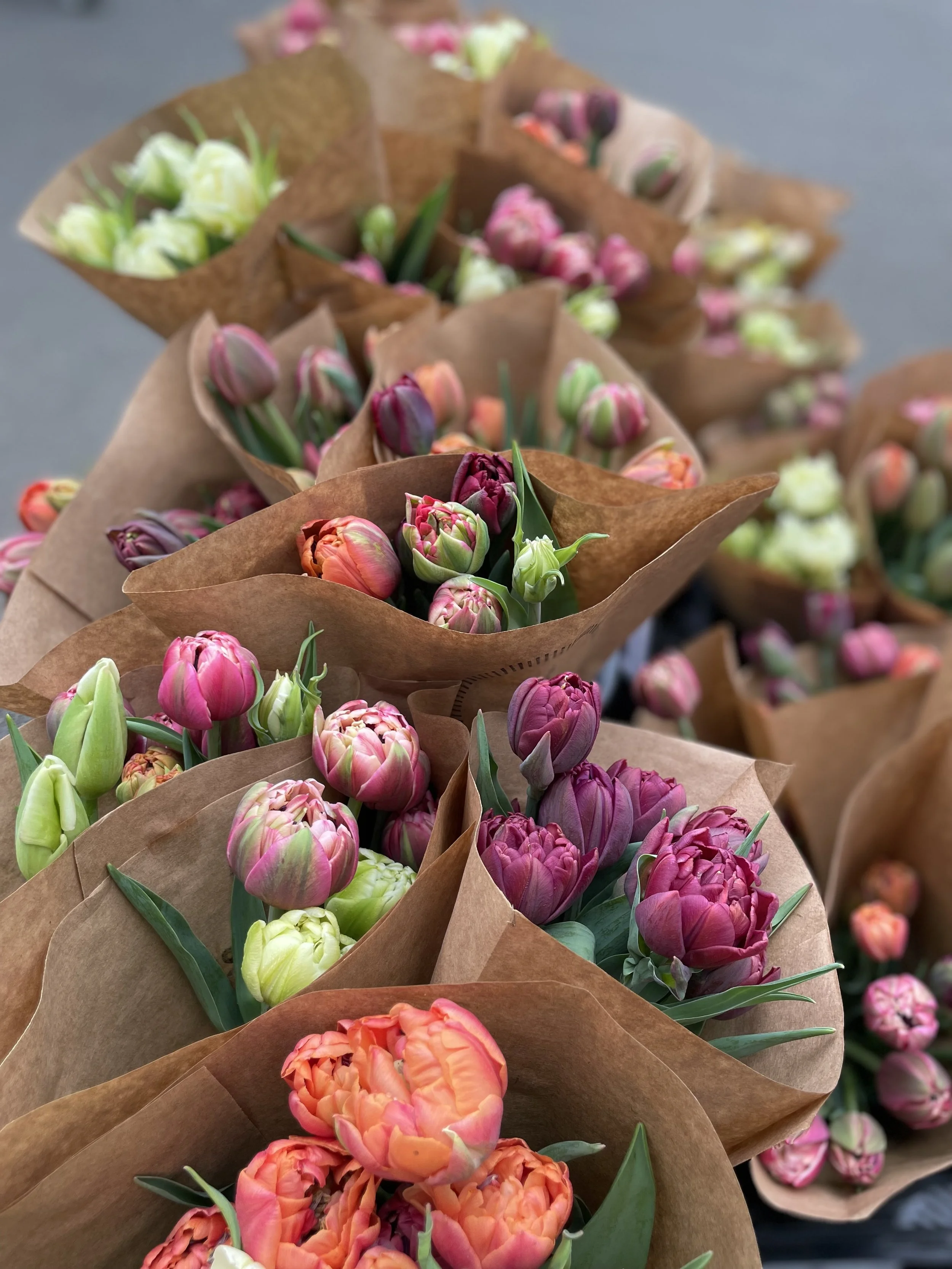
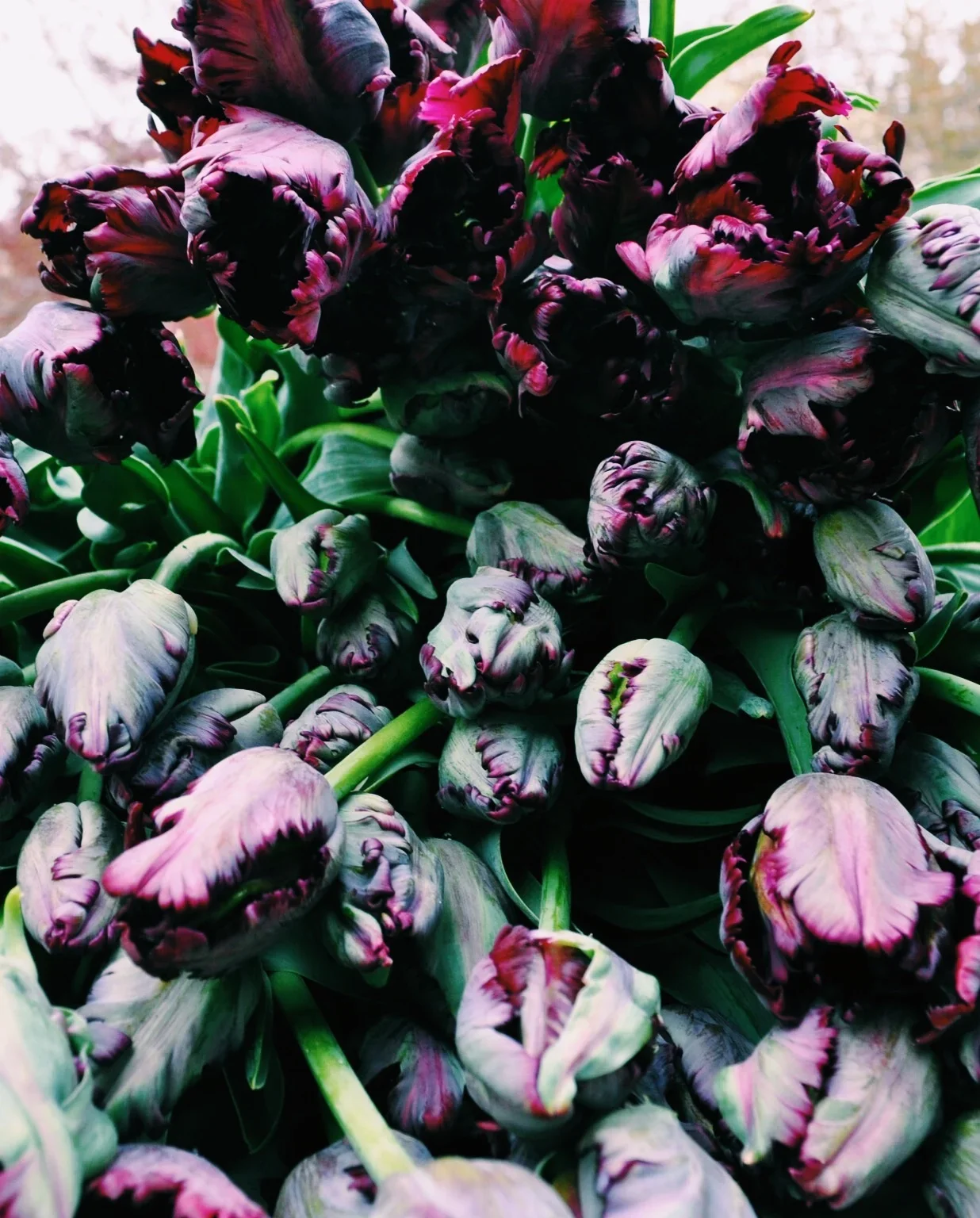
But, look at these beauties! It’s so hard to imagine spring on Four Root Farm without them. Each year, we watch them unfurl their intricate petals in a stunning array of different colors, and we’re convinced to do crazy things for them. And we’re not the only ones. If you’re so inclined, do a little reading about “tulipmania,” widely considered to be the first economic bubble driven by, you guessed it, tulips. Tulips have a long history of making people do crazy things, and I don’t know if we’ll stop any time soon on Four Root Farm. 

At least not in 2027, that bulb order is already out the door!

-Kiersten

Hello Spring!

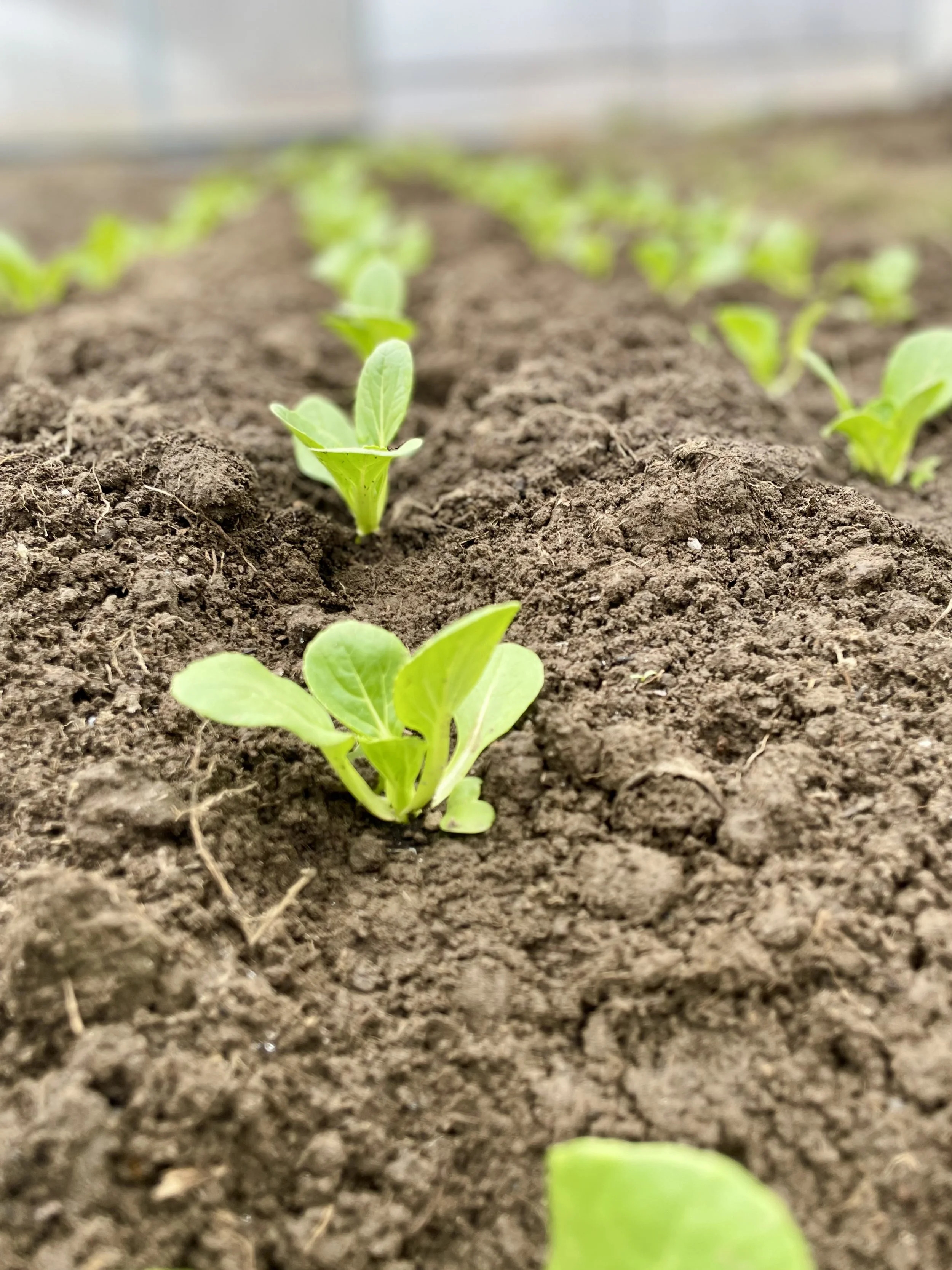
Baby bok choy… grow babies grow!

And just like that spring is here! Almost as quickly as last month’s blizzard blanketed the farm in snow, it’s gone. We’ve been left looking at muddy fields, various row covers and tarps blowing about the property, and weeds starting to spring to life in the longer, warmer days.

All the field clean-up that was left pending for months while we waited for the ground to unfreeze and the snow to melt is now possible. Unfortunately, we have some more pressing priorities.

Namely, getting plants in the ground! Our first day back at the Wooster Square Farmers’ Market is April 18th - less than a month away! We’ve been busy seeding, bed prepping, and transplanting to have seedlings, food, and flowers ready for you.

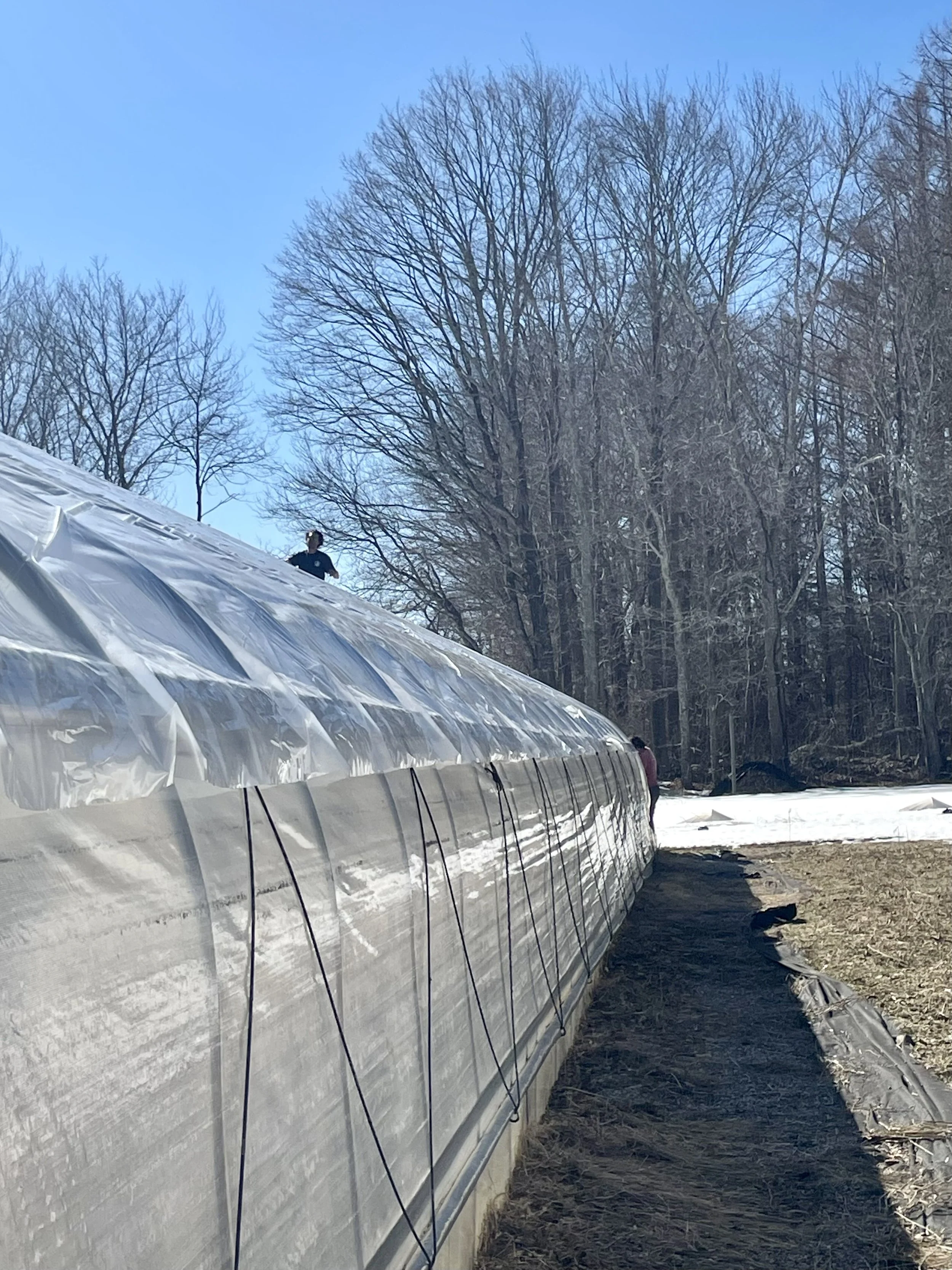
Aaron leads the tunnel re-covering from above.

The first vegetable transplants were scheduled for the first week of March. Before we could plant, we needed to re-cover their high tunnel. As mentioned in January, we cut the plastic off one of our tunnels due for repairs this year. Now, it needed a roof again. It’s an all-hands-on-deck type of job to get a new 100’ x 42’ piece of plastic up, over, and secured to the structure. Luckily, we had a clear day with little wind to do so. With two people on ladders at each end of the tunnel and 4 more people on the ground holding each corner of the plastic, we slid the plastic across the top of the tunnel, pulled it taut, and fastened it down with “wiggle wire”.

Shortly thereafter, Rachel seeded beets and carrots, and we transplanted spring fennel, kohlrabi, and bok choy. Vegetables are on the way!

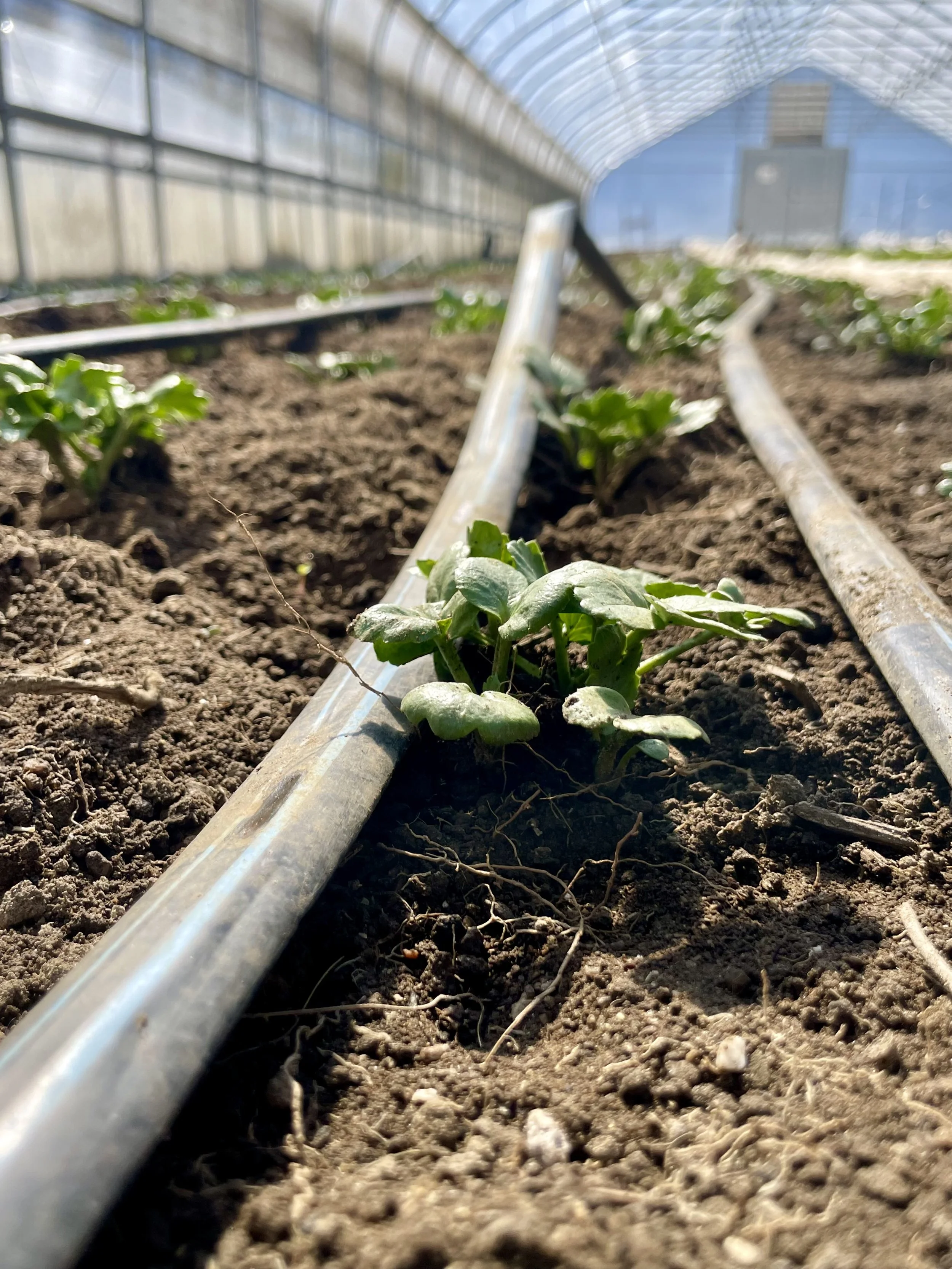
Ranunculus soaking up the sun

We’ve been transplanting flower seedlings for weeks now into the other high tunnels. Ranunculus and anemones are well underway. Snapdragons went into the ground last week. With the addition of two new high tunnels on the property in 2024, Elise was able to overwinter more crops this season. Flowers like fritillaria, statice, and eucalyptus were planted last November. By taking advantage of warm, sunny days late last fall and early this spring, they get a jump on the flowers planted this year. Most crops seemed to have survived the winter well, so you may see new additions in Mother’s Day bouquets this year!

The last crop demanding our attention in March is a bit different from the rest. It’s endive! We described its unique life cycle in our April 2022 blog post. They require a little extra manipulation to form their blanched heads. And now, I’ll be dreaming of endive salads for the next 3 weeks until they’re ready to harvest.

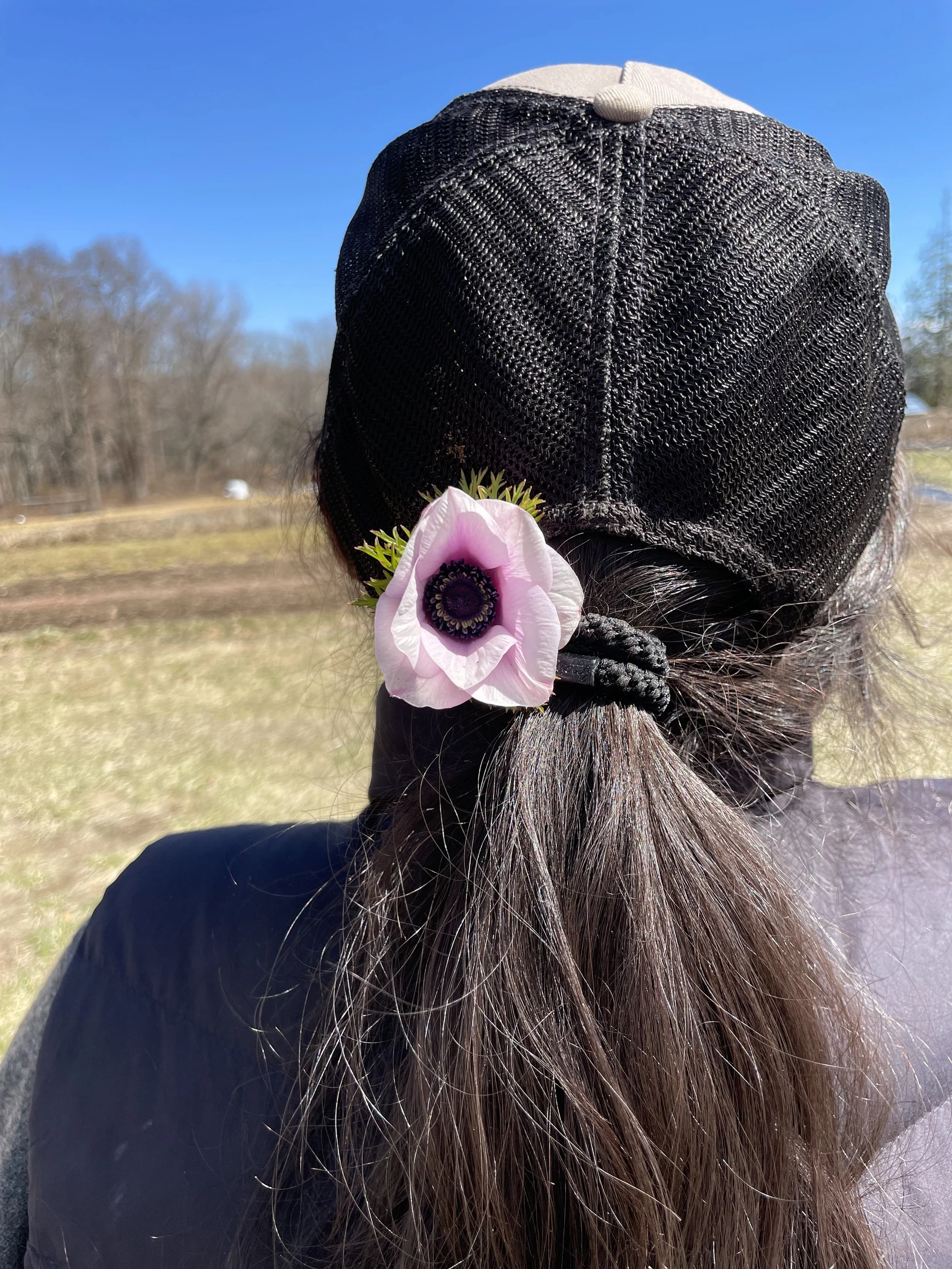
An early anemone… perfect for elevating farmer hairstyles!

As the days get longer and longer, food and flowers will be here before you know it! Our sign-ups for 2026 Market Shares are open until April 15th, and our Spring Flower Share remains open until the first week of flowers on April 25th. If you haven’t already, we’d love to have you join this year!

See you soon!

Kiersten

So close, yet so far

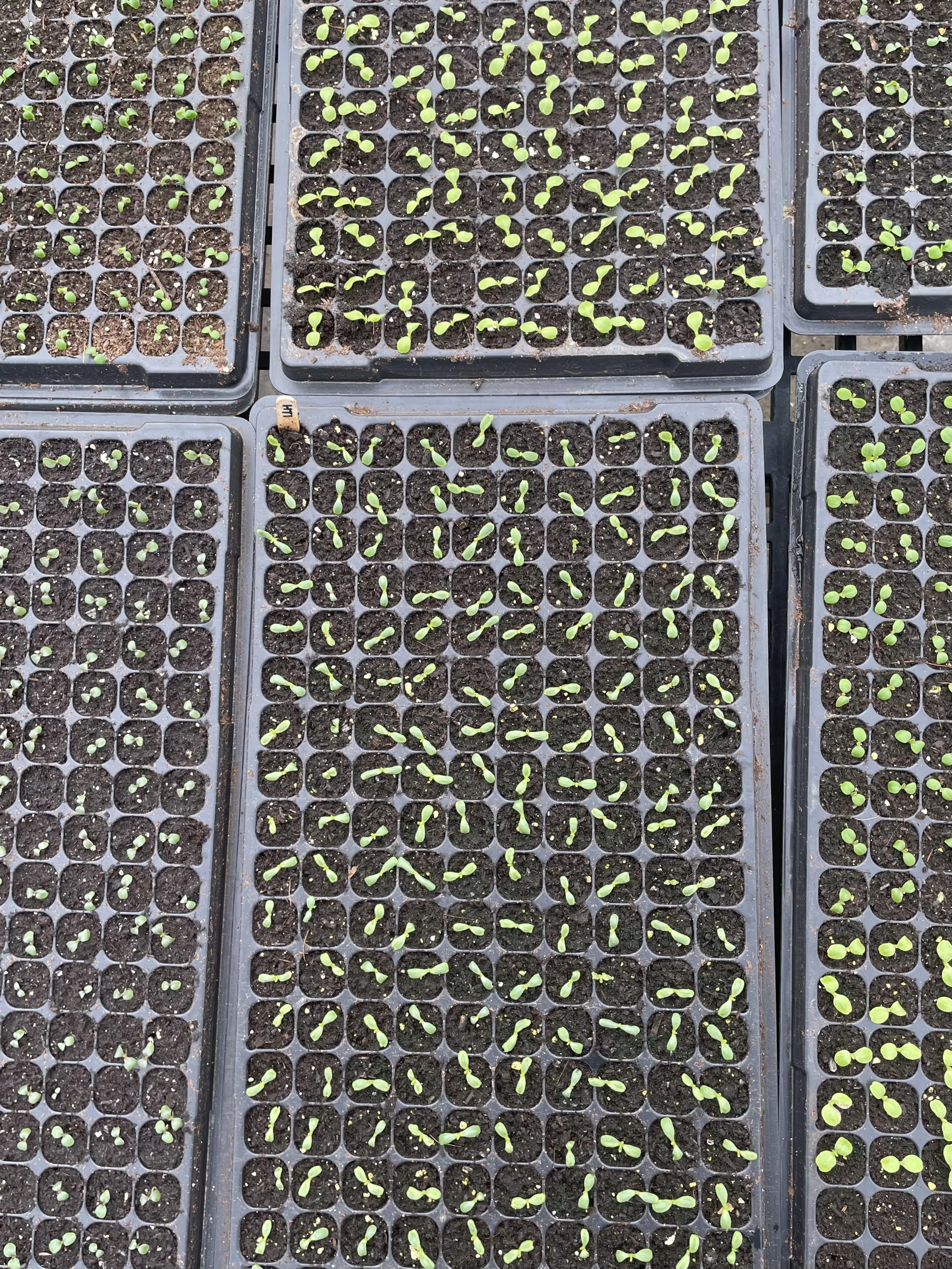
Spring feels so close, yet so far away! Believe it or not, the first vegetable crops of the season get transplanted in 3 weeks. The ranunculus and anemone transplants go into the ground, like, now. Rachel seeds tomatoes and hot peppers for the plant sale this week, and the cooler-turned-seedling-incubator has started to fill up with trays and trays of onions, Chinese broccoli, bok choy, eucalyptus, phlox, and more. When I’m working in the greenhouse or high tunnels and the sun is shining, spring seems just around the corner. But, step out of the greenhouse…

And it’s a totally different story! It feels impossible to write an update on February without centering the snow. It’s been covering the ground all month. On one hand, it does provide good insulation for our overwintered crops. The snow actually helps keep the soil warmer than if the ground were bare and, as such, protects the plant roots. 

On the other hand, the snow is burying some things that we’d really like access to. Typically in the winter, we pull large silage tarps from the fields into the high tunnels and blanket the bedtops with them. Light deprivation, plus the heat generated under the tarps when the sun is shining, kills off weeds and any remnants of last season’s crops. By March, we pull the tarps off, and the beds are ready for planting. 

This year? The tarps have been hidden under feet of snow for weeks. Without the tarps, we’ve resorted to good old-fashioned hand weeding. It’s not as effective and takes much more labor. But sometimes you just work with what you got. 

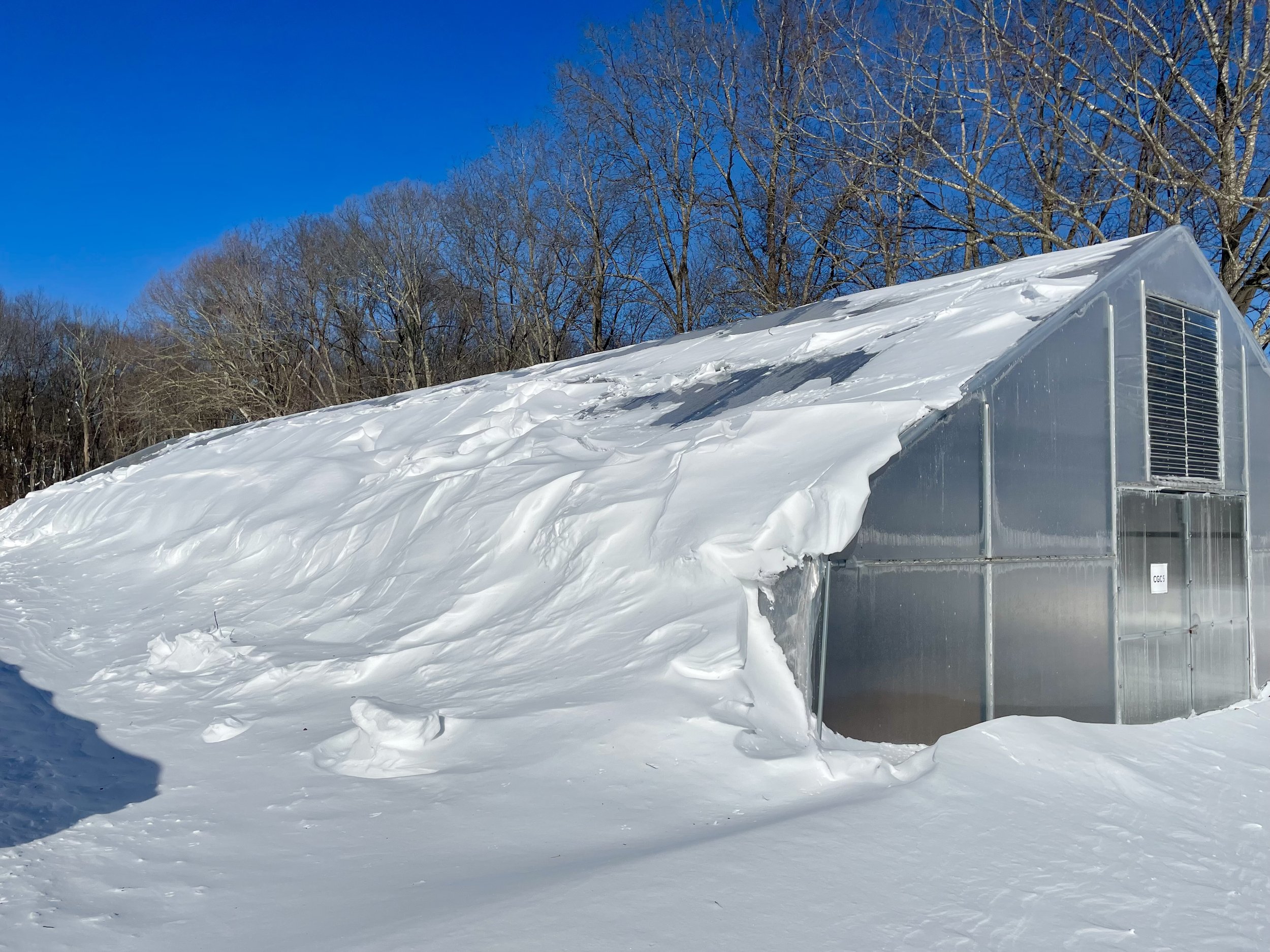
This week’s blizzard brought its own set of challenges - chief among them, digging out the high tunnels. If heavy snow accumulates on top of the tunnels, the plastic can tear. In extreme cases, the tunnel itself could collapse. We’re grateful for our super sturdy, well-built tunnels from CT Greenhouse, so we weren’t too concerned about structural failure. Still, we do not want to be replacing tunnel plastic in this weather, especially so close to planting. 

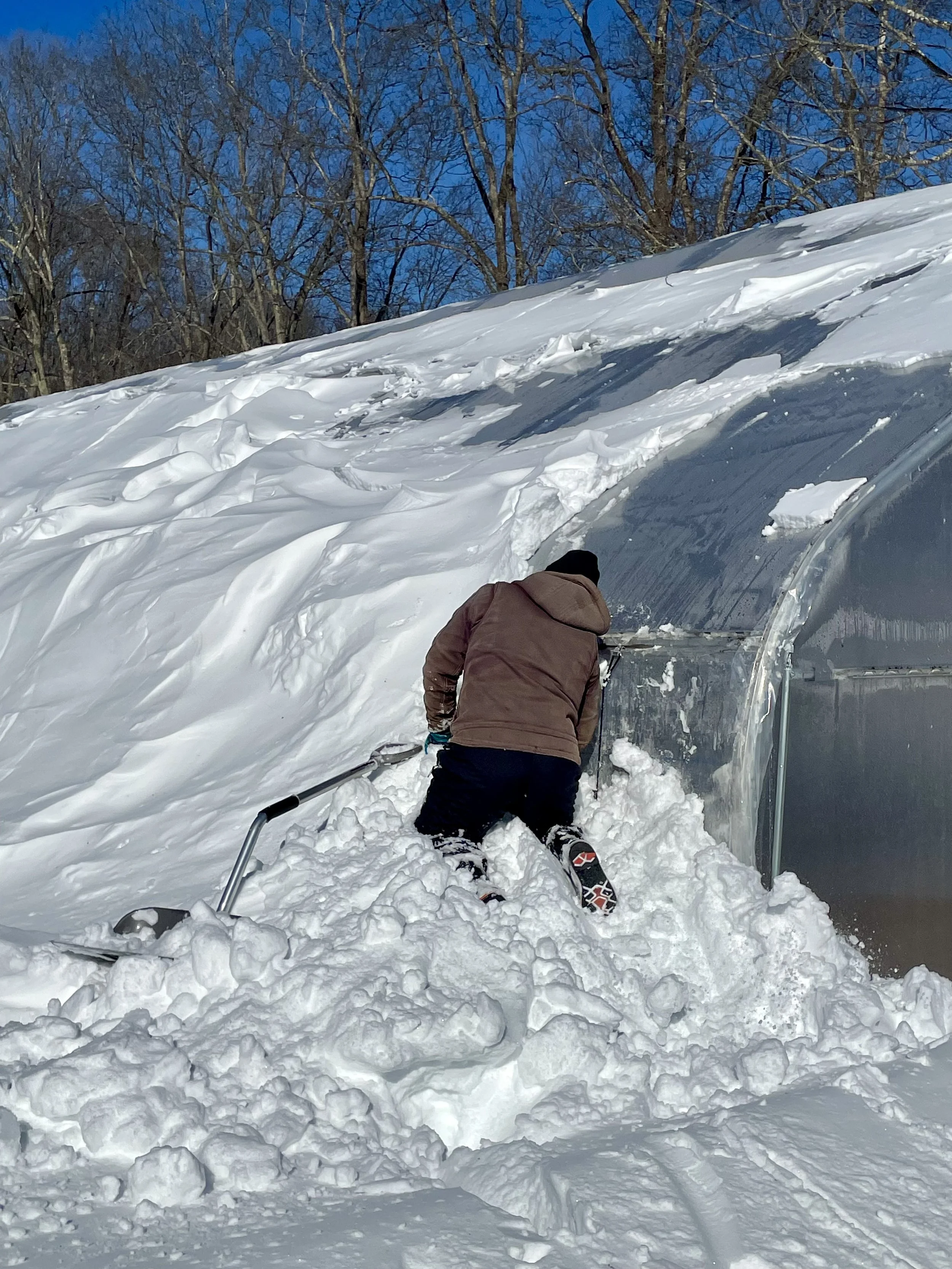
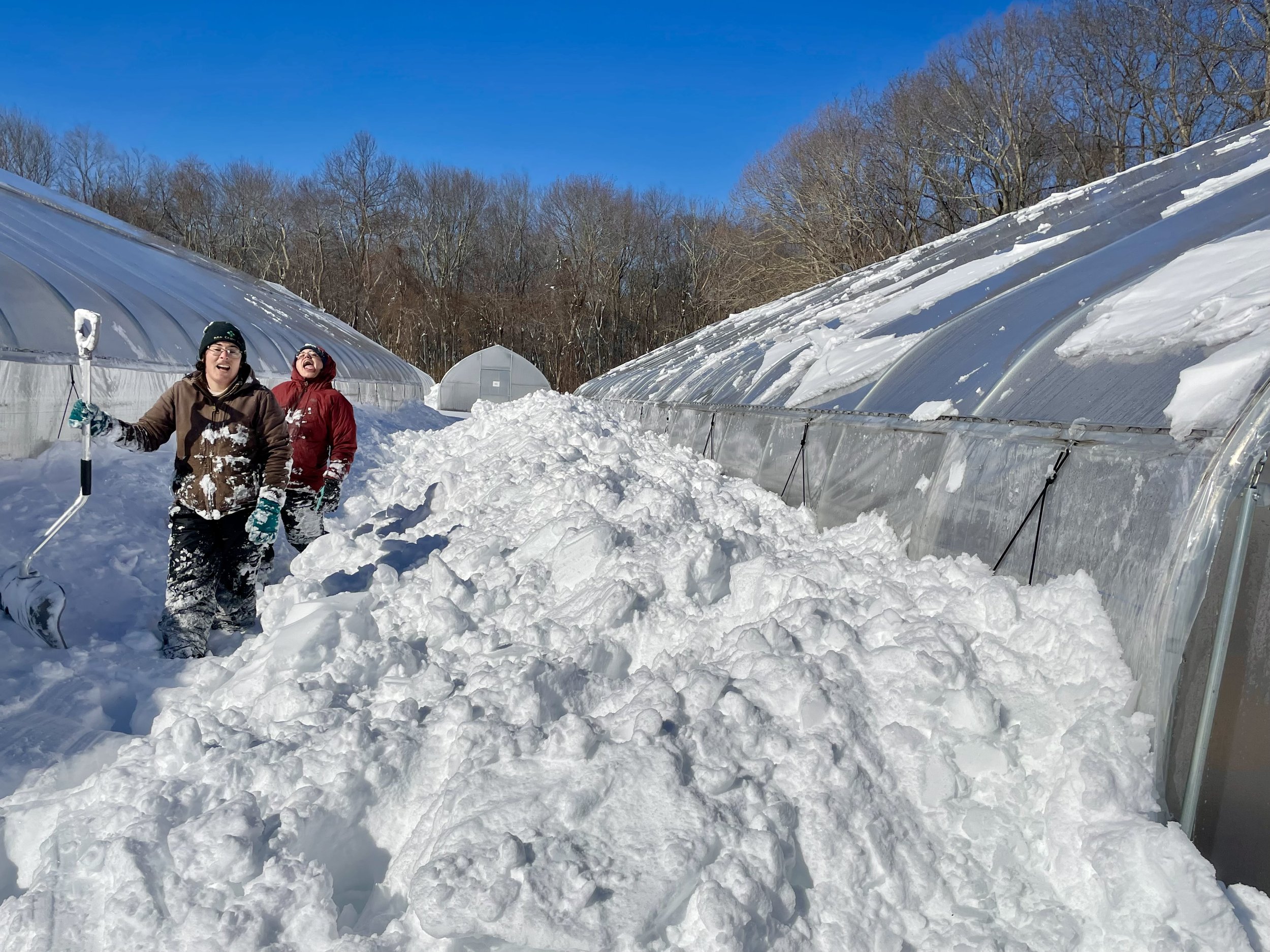
In theory, snow should slide right off the sides of the high tunnels. However, with the amount of accumulation we experienced, massive drifts pile up along the sides. Those drifts prevent further snow from sliding off the roofs and cause more weight to accumulate on top. Armed with shovels, we climbed onto the snowbanks to clear the sides of the tunnels, creating space for the additional snow to slide off the roof as it should.

Before…

… and after! Mission complete!

Despite the stubbornly wintery weather, the days are getting longer, the seedlings are growing, and we are doggedly preparing for spring. Looking forward to sharing flowers and vegetables with you again soon!

-Kiersten 

Elise, the intrepid snowblower!

Jumping right in!

Even though it's only January, we’re jumping right into the 2026 growing season. Yes, we had a few weeks of rest and time with family around the holidays. Even in the first week of the month though, we got right down to business. First up, crop planning! A multi-day process of figuring out what to grow more of (hello, head lettuce and cabbage), what to grow less of (sorry, dwarf bok choy), and where to grow it on the farm (more sweet peppers in a high tunnel this year!). Elise does the same process with flowers. (I’m already looking forward to all the additional mums we should have this fall!).

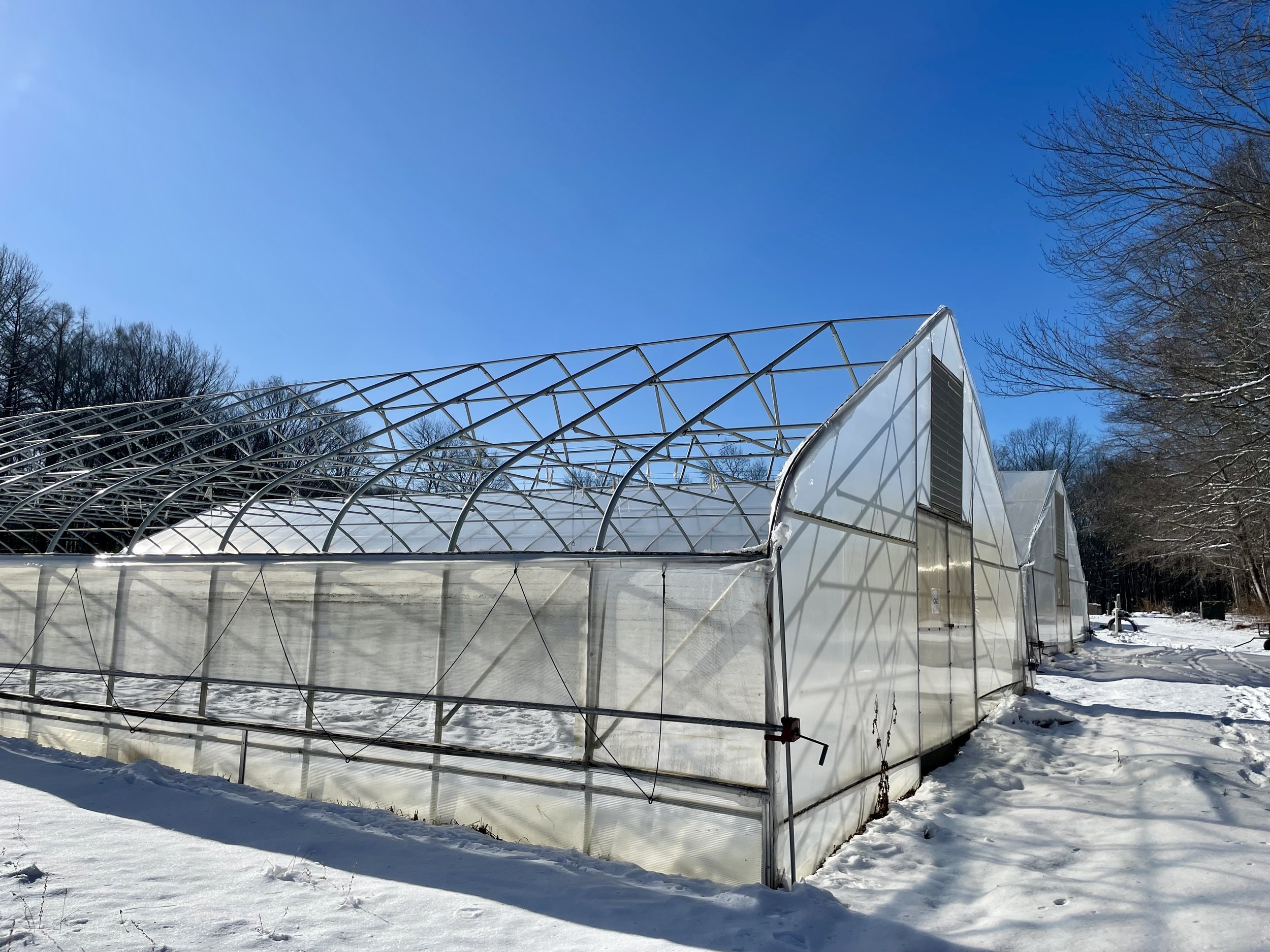
Farming in January does look a lot more like an office job, but there’s still work to be done requiring suiting up in many jackets and a pair of snow boots. For one, we cut the plastic off one of our high tunnels. The plastic is due for replacement this year. Rather than replace it right away, we’ll leave the tunnel uncovered for another month to allow for precipitation to reach the soil, hopefully helping to balance moisture and salts therein. The foot+ of snow last week should certainly be beneficial!

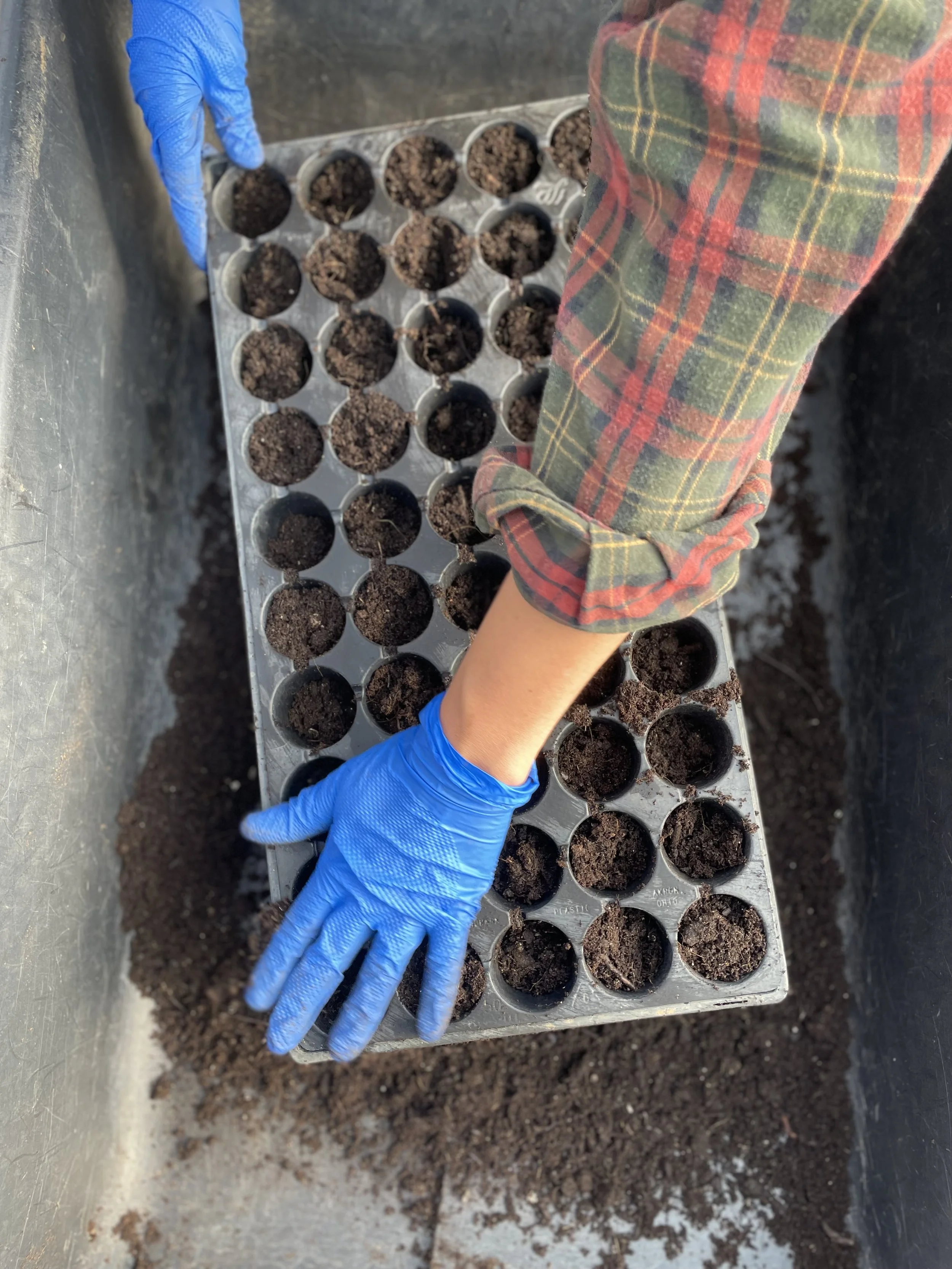
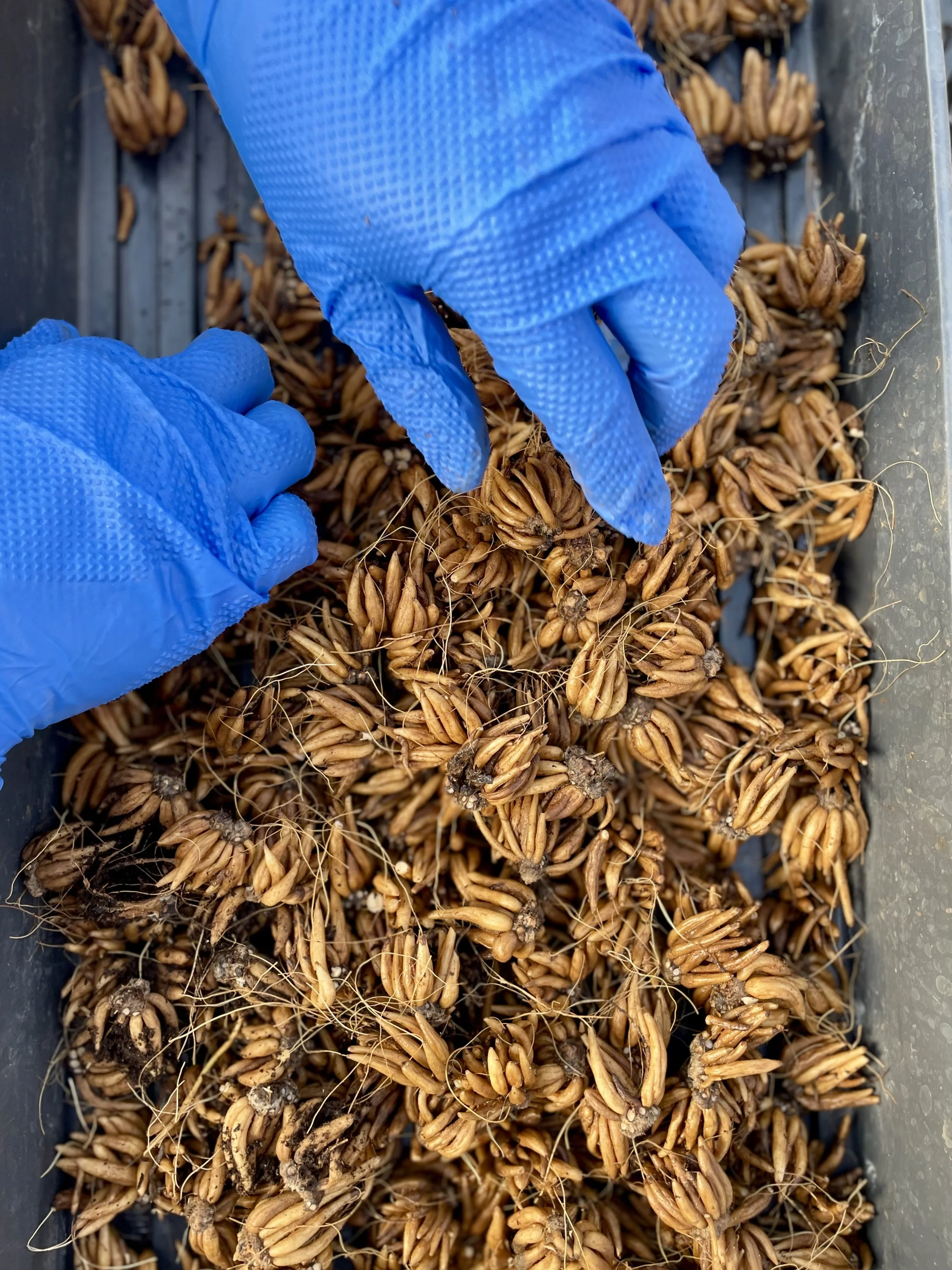
Flower seeding is already underway as well. Lisianthus, notoriously slow-growing, start their growing season from teeny tiny seeds in mid-January. For the ranunculus and anemone crops, we plant their corms into larger cell seeding trays. Corms are similar to a bulb in that they’re an underground plant structure for storing nutrients. Looking at them though, they seem wildly different from a bulb! The ranunculus corms look like miniature octopuses.

With the start of seeding, we also needed to get our flooler ready to go! (That’s flower-cooler, for the uninitiated.) This is an annual process of converting one of our cold-storage coolers into a temporary grow room held at about 70 degrees instead of sub-40.

Despite jumping right into the 2026 season, there’s still some nagging things from 2025 to take care of. The sudden drop in temperatures in December took all of us a bit off guard! We normally spend the last month of the year cleaning up the fields in preparation for winter. However, the weather had different plans. The numerous days with below freezing temperatures froze the ground much quicker than usual. It became impossible to pull stakes out of the ground, lift fabrics off bedtops, and even harvest the last bed of carrots we had waiting in the field. Unfortunately, we’ll need to wait for the next stretch of warm(er) days for those tasks. Judging by the inches and inches of snow on the ground and the 10-day weather forecast, it doesn’t seem like that will be any time soon!

- Kiersten