
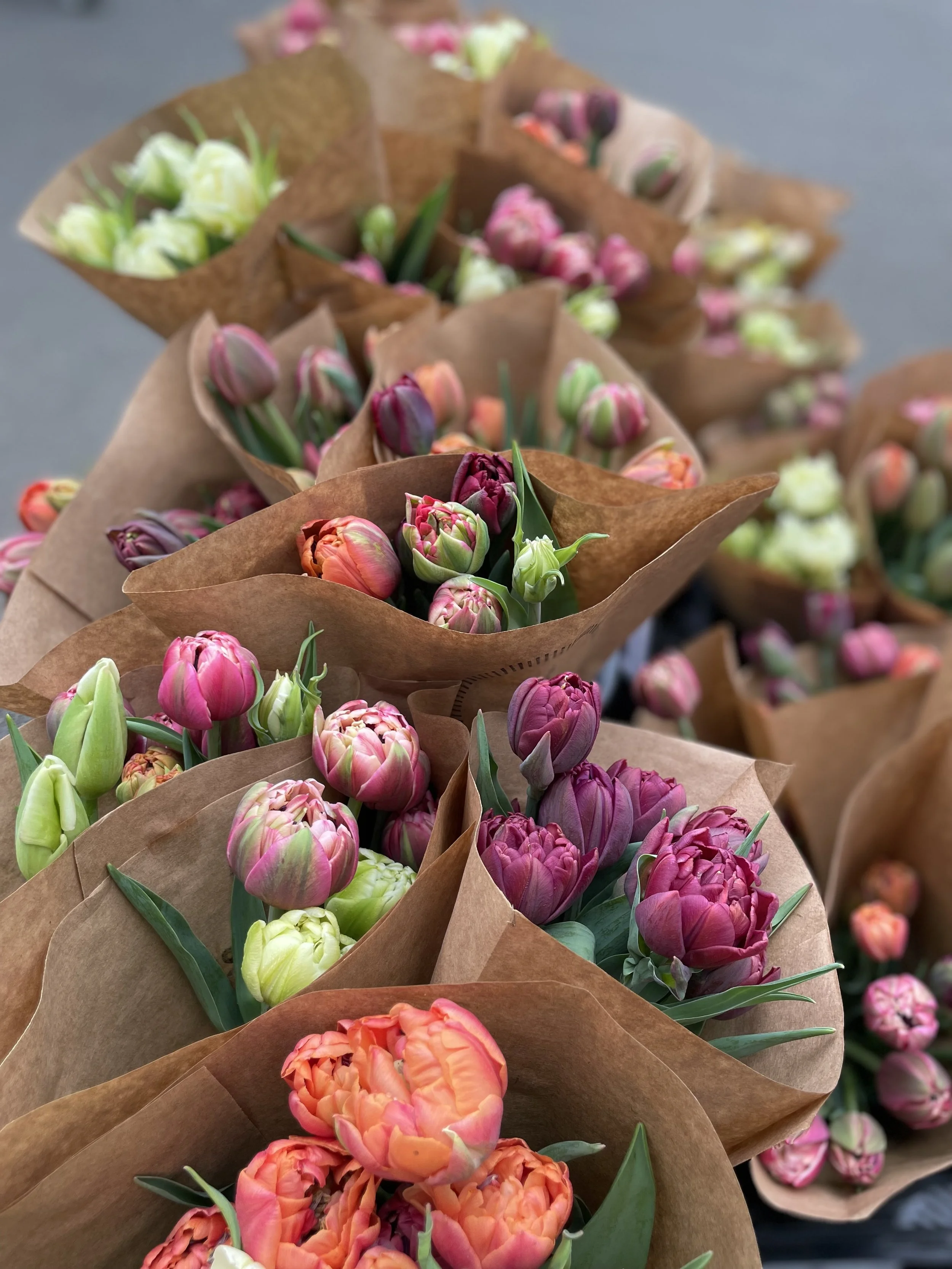
The sun has been shining, the trees are starting to leaf out, and we are in the thick of tulip season. Tulips feel like a quintessential part of the spring season. We see them everywhere this time of year - incorporated into city landscaping, popping up in our neighbors’ gardens - and so, of course, we expect to see them in the farmers’ market stands of our favorite cut flower growers. You drop a bulb in the ground, and they come back year after year, right? How hard could it be?
Oh, the things we do for tulips! These finicky flowers require a lot of behind-the-scenes finagling to get from a bulb to a vase in a process that takes well over a year!
For starters, Elise placed an order for this year’s tulip bulbs in February 2025. (Yep, 2025!) The bulbs arrived at the farm in late October 2025, and, as mentioned in last November’s blog post, we constructed a raised bed and planted the bulbs shortly thereafter. The bulbs sit snugly under a deep layer of compost, so they’re quite protected from the cold. They also sit securely above a layer of hardware cloth, a wire mesh sheet, which protects them from burrowing rodents over the winter.
For the next 5 months, the bulbs don’t appear to be very active from the surface. However, they’re doing the important work of growing their root systems. During this time, they need careful water management. If underwatered, the bulbs won’t create good roots. If overwatered, the bulbs will rot. We typically set up sprinklers for our tulip bed in December to make sure their soil stays sufficiently damp.
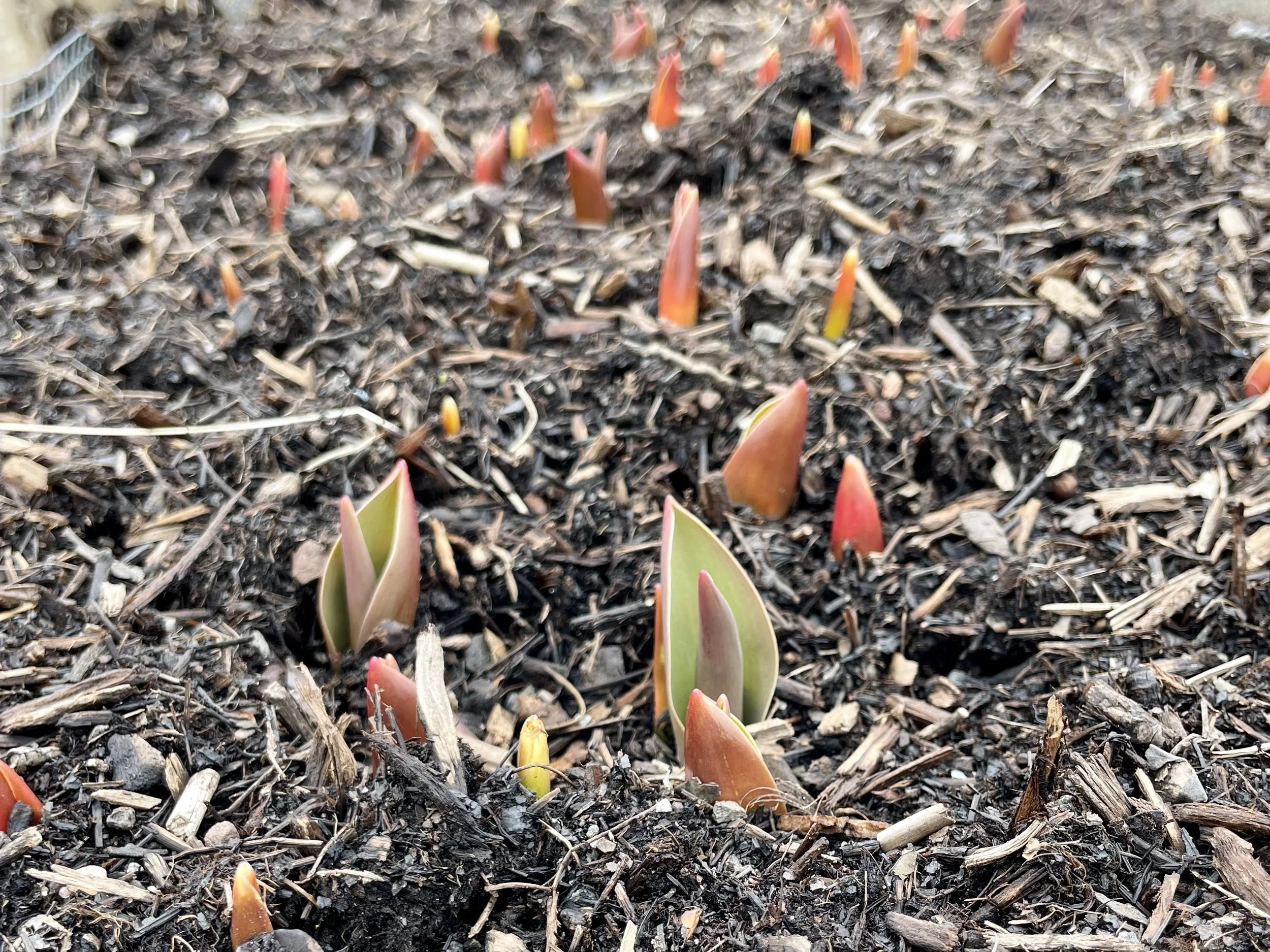
In March 2026, tulips leaves finally began to poke above the surface. Now, we can really watch them grow! We also need to watch the weather though. It seems to be the new normal to have a heat spike each April. This year, we saw three days of over 80 degree temperatures. The extreme heat jumpstarts tulip flowering. Tulips are harvested at “color crack,” which is when color just starts to show at the tip of the flower. The stems store best at this stage. They continue to ripen slowly while stored in the cooler before sale and then have the maximum vase life possible as they open up in the vases in our homes. During those mega-hot days, Elise checked on the tulips many times a day. Even still, sometimes they would pass color crack and open up before she could get to them. The jumpstart into flowering can also cause the tulips to flower too early with short stems or small flower heads. To combat the heat, we pulled shade cloth over the bed to keep the plants slightly cooler.
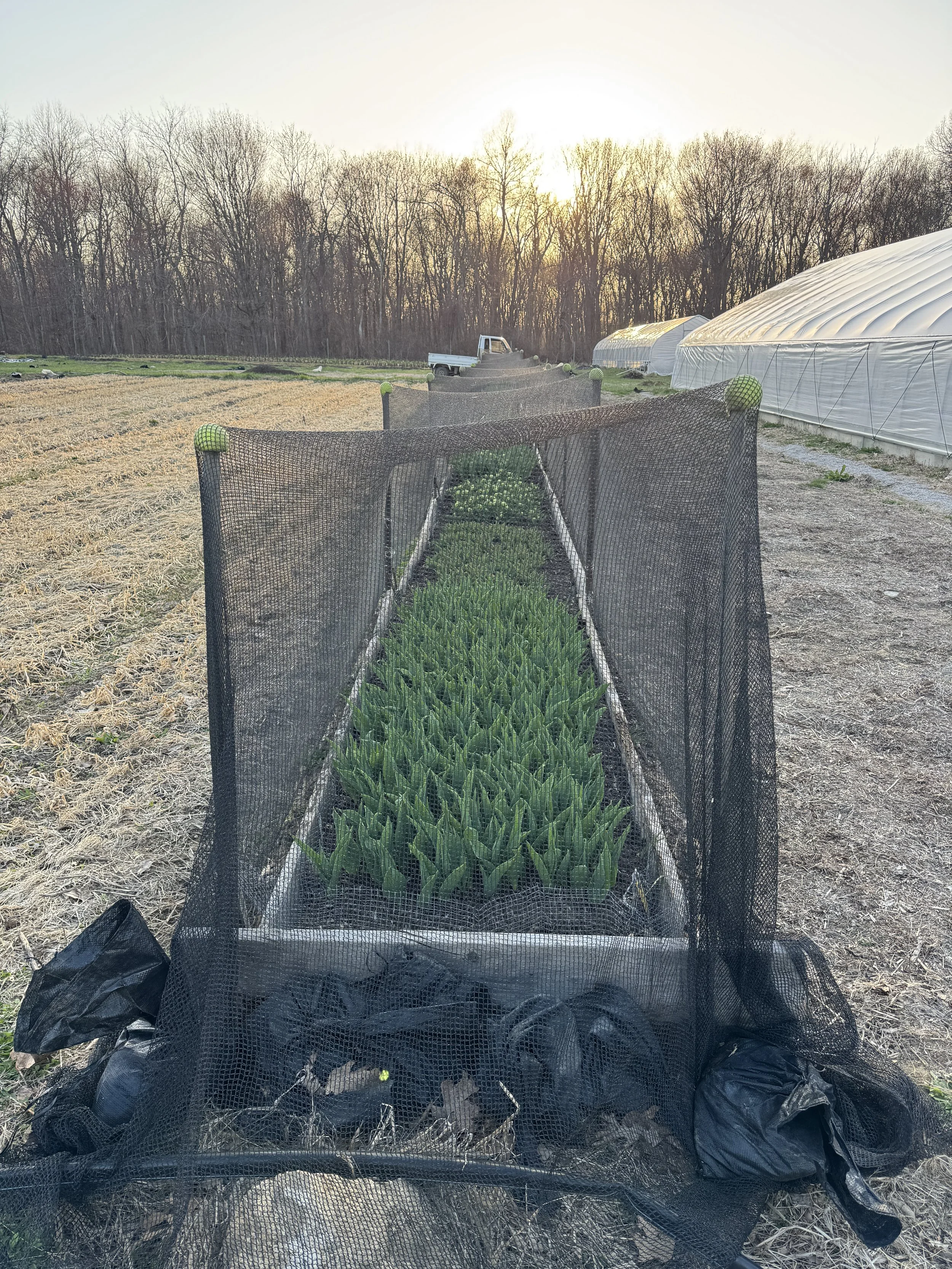
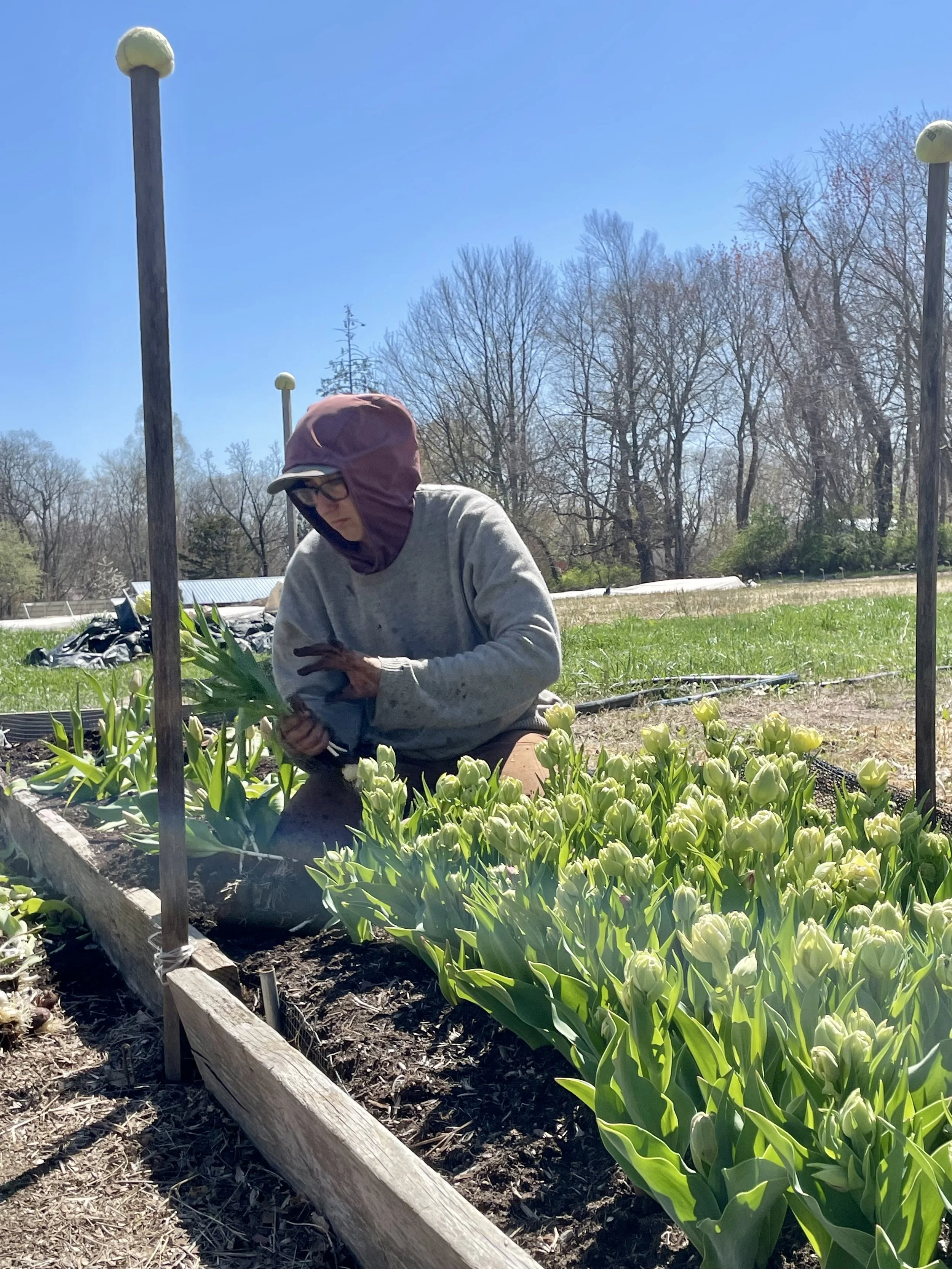
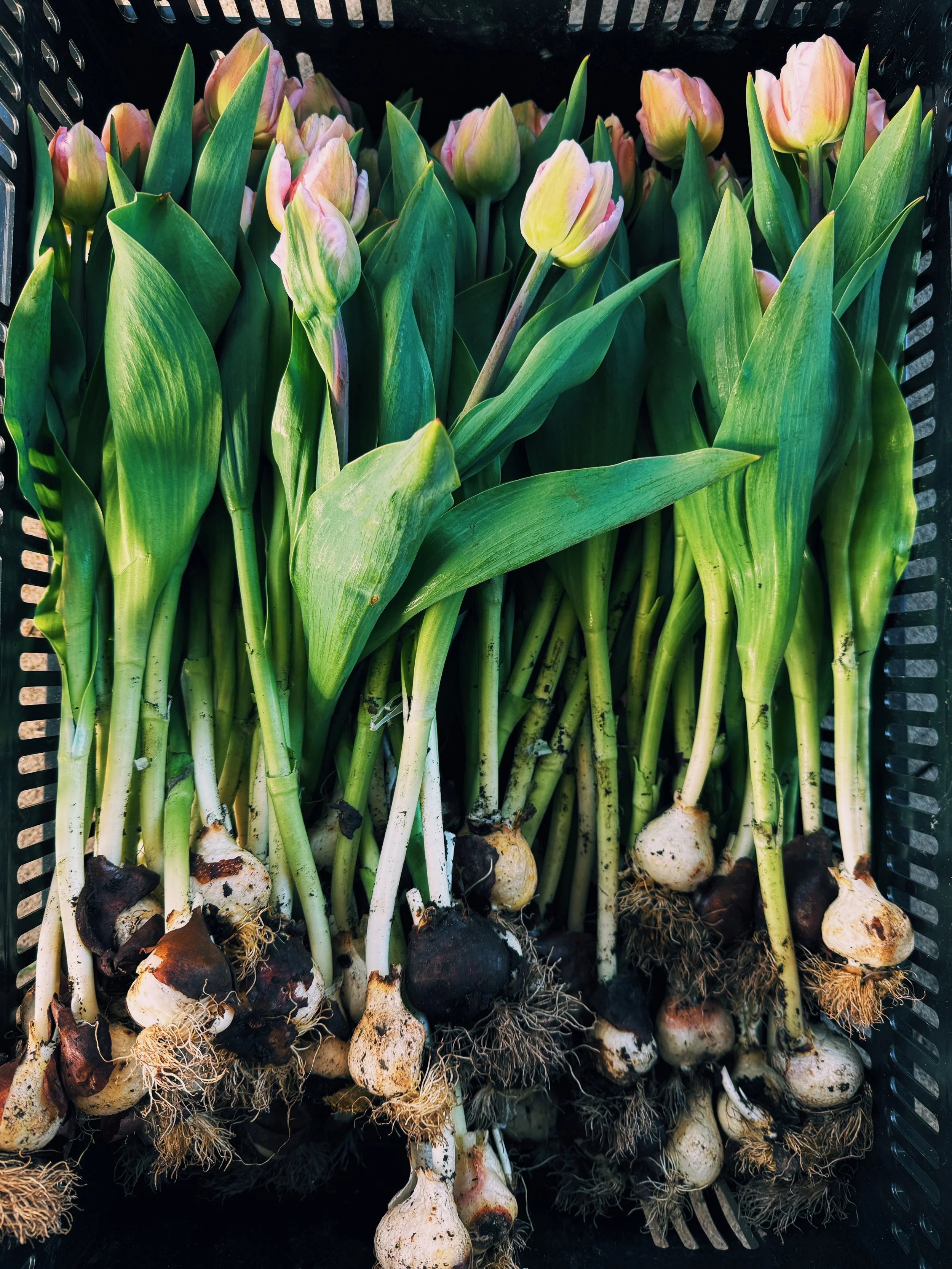
Unfortunately, we don’t leave the bulbs in the ground for more than one season on the farm. They’re very susceptible to disease, and the quality of the flowers would diminish with each subsequent year once disease struck. Furthermore, the amount of space required to grow tulips perennially would quickly become cost-prohibitive because their yield is so much lower than other types of flowers (let’s put a pin in this, I’ll get back to it in a bit!). So, Elise orders new bulbs each year and makes sure to pull the bulbs out with the stem at harvest time.
If you’re following the timeline, you may have noticed that we harvest tulips in April, but we place an order for next year’s bulbs in February. This means Elise must place her order for 2027 tulips before she’s even seen the 2026 tulips emerge above the ground! It makes trialing new varieties very tricky and very costly. Elise essentially must bet on a variety for two years before seeing how it performs on the farm.
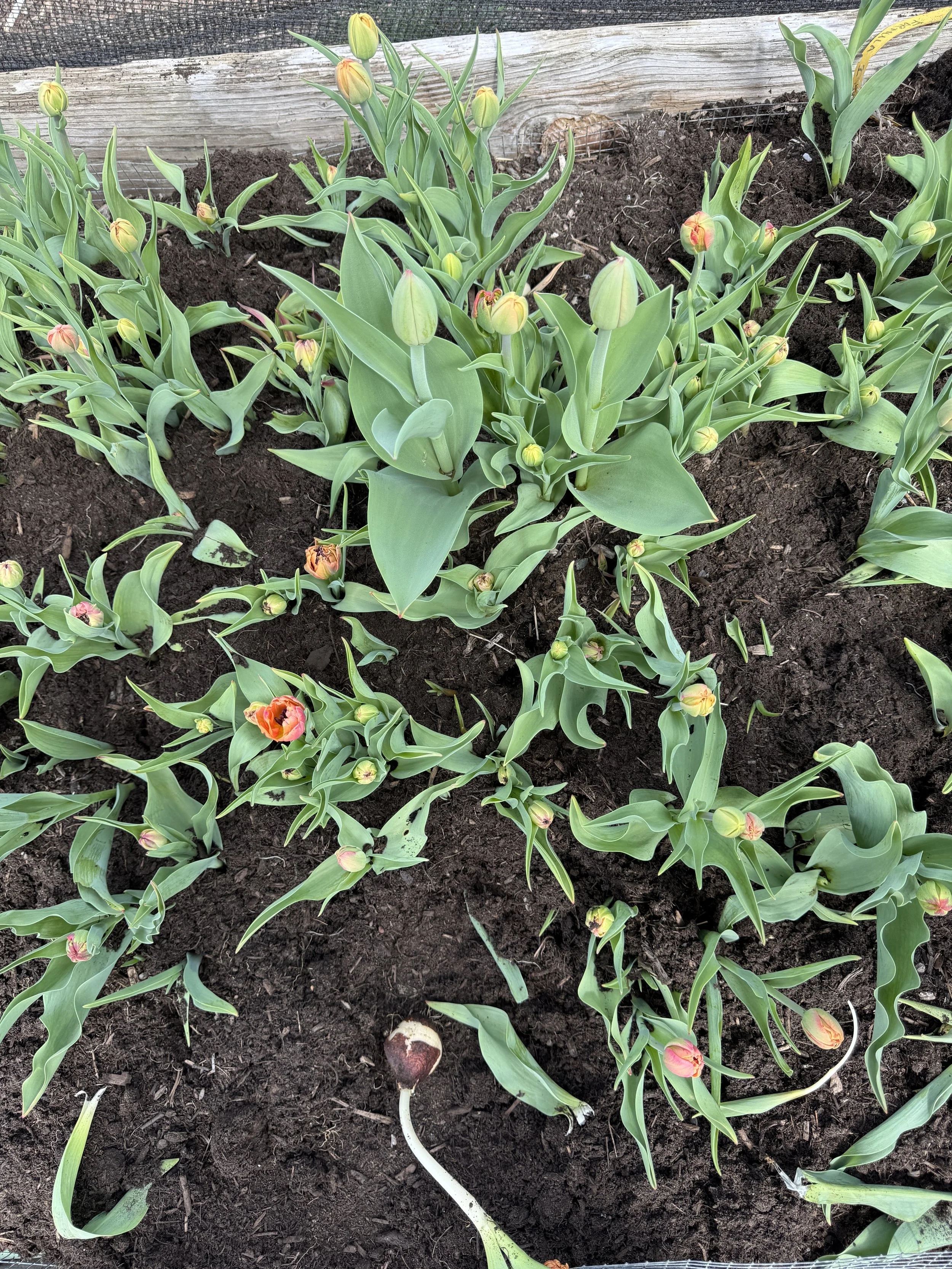
It can be an expensive bet, too. Bulbs are increasingly costly, and this year in particular tariffs added $0.03/bulb or 7.5% to our order cost. Additionally, crop losses are consistently high for tulips. In a normal year, we expect about 30-40% loss, so only 60-70% of the bulbs planted will yield a flower quality enough to sell. Depending on the variety (and the weather that year), losses can easily be higher. In the variety pictured here, we experienced a loss of 75% of the bulbs. When you add it all up - the long time-frame to grow and manage them, the expensive inputs, the high losses - tulips have very low margins. Does it even make sense to grow them?
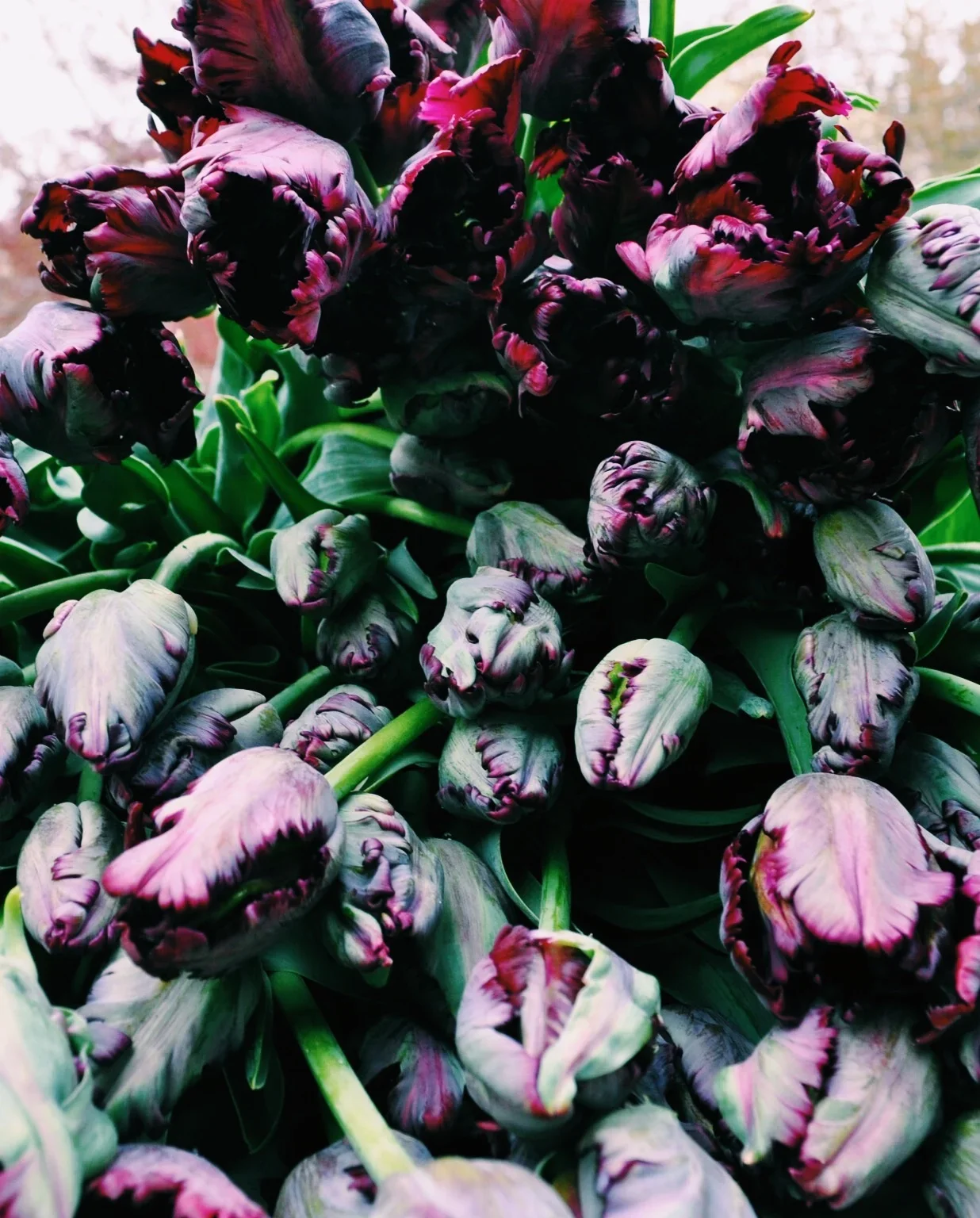
But, look at these beauties! It’s so hard to imagine spring on Four Root Farm without them. Each year, we watch them unfurl their intricate petals in a stunning array of different colors, and we’re convinced to do crazy things for them. And we’re not the only ones. If you’re so inclined, do a little reading about “tulipmania,” widely considered to be the first economic bubble driven by, you guessed it, tulips. Tulips have a long history of making people do crazy things, and I don’t know if we’ll stop any time soon on Four Root Farm.
At least not in 2027, that bulb order is already out the door!
-Kiersten