
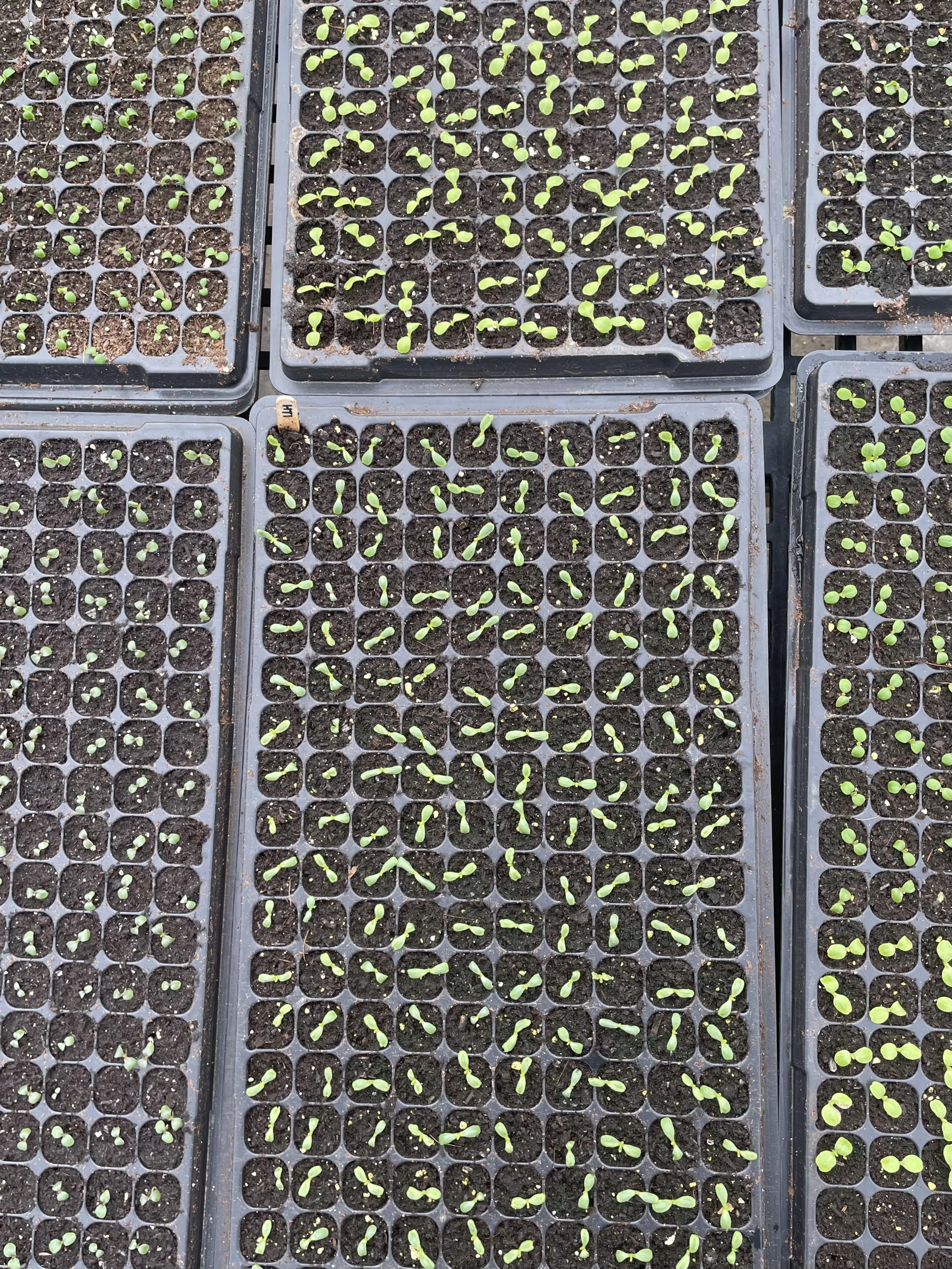
Spring feels so close, yet so far away! Believe it or not, the first vegetable crops of the season get transplanted in 3 weeks. The ranunculus and anemone transplants go into the ground, like, now. Rachel seeds tomatoes and hot peppers for the plant sale this week, and the cooler-turned-seedling-incubator has started to fill up with trays and trays of onions, Chinese broccoli, bok choy, eucalyptus, phlox, and more. When I’m working in the greenhouse or high tunnels and the sun is shining, spring seems just around the corner. But, step out of the greenhouse…
And it’s a totally different story! It feels impossible to write an update on February without centering the snow. It’s been covering the ground all month. On one hand, it does provide good insulation for our overwintered crops. The snow actually helps keep the soil warmer than if the ground were bare and, as such, protects the plant roots.
On the other hand, the snow is burying some things that we’d really like access to. Typically in the winter, we pull large silage tarps from the fields into the high tunnels and blanket the bedtops with them. Light deprivation, plus the heat generated under the tarps when the sun is shining, kills off weeds and any remnants of last season’s crops. By March, we pull the tarps off, and the beds are ready for planting.
This year? The tarps have been hidden under feet of snow for weeks. Without the tarps, we’ve resorted to good old-fashioned hand weeding. It’s not as effective and takes much more labor. But sometimes you just work with what you got.
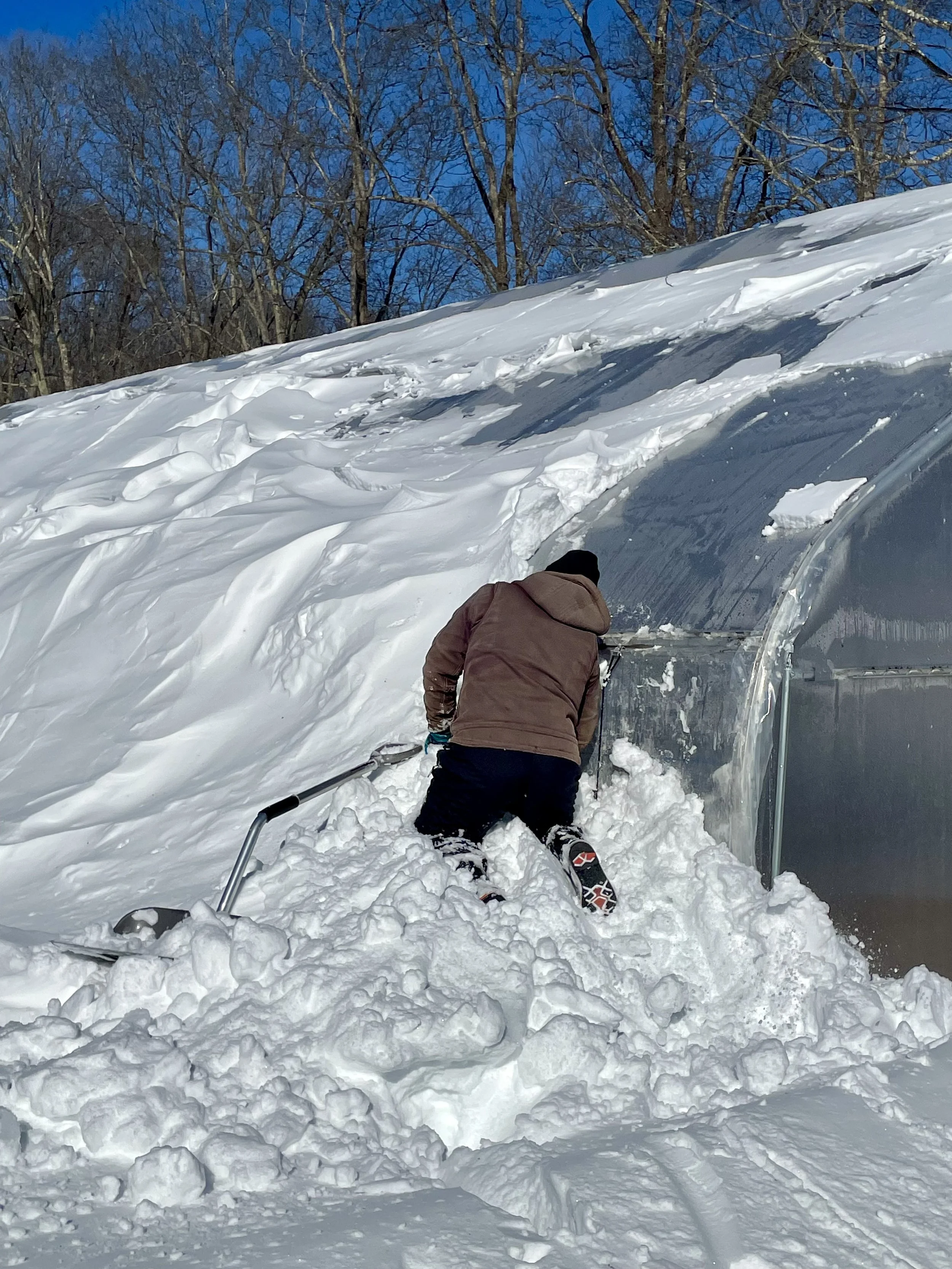
This week’s blizzard brought its own set of challenges - chief among them, digging out the high tunnels. If heavy snow accumulates on top of the tunnels, the plastic can tear. In extreme cases, the tunnel itself could collapse. We’re grateful for our super sturdy, well-built tunnels from CT Greenhouse, so we weren’t too concerned about structural failure. Still, we do not want to be replacing tunnel plastic in this weather, especially so close to planting.
In theory, snow should slide right off the sides of the high tunnels. However, with the amount of accumulation we experienced, massive drifts pile up along the sides. Those drifts prevent further snow from sliding off the roofs and cause more weight to accumulate on top. Armed with shovels, we climbed onto the snowbanks to clear the sides of the tunnels, creating space for the additional snow to slide off the roof as it should.
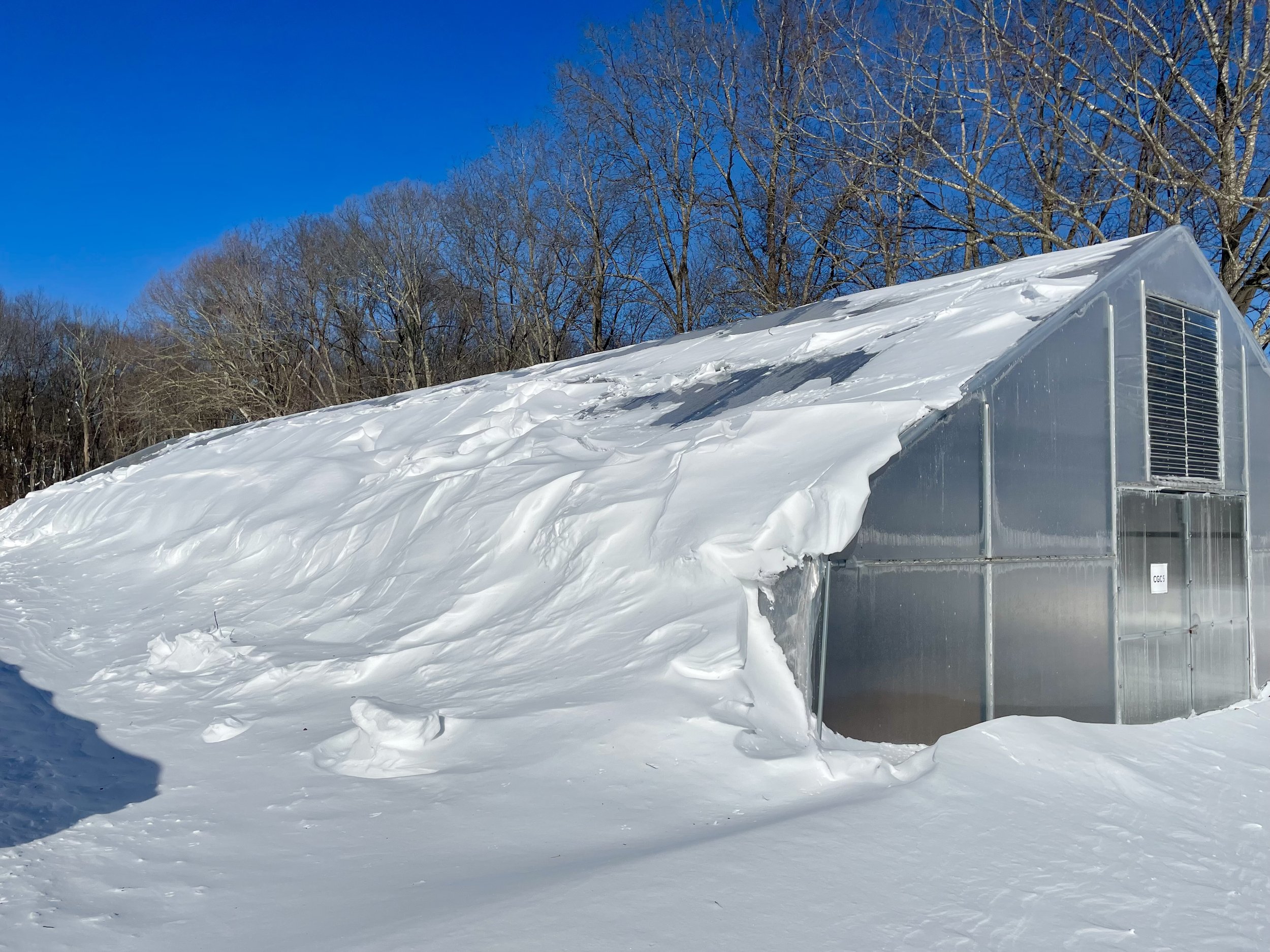
Before…
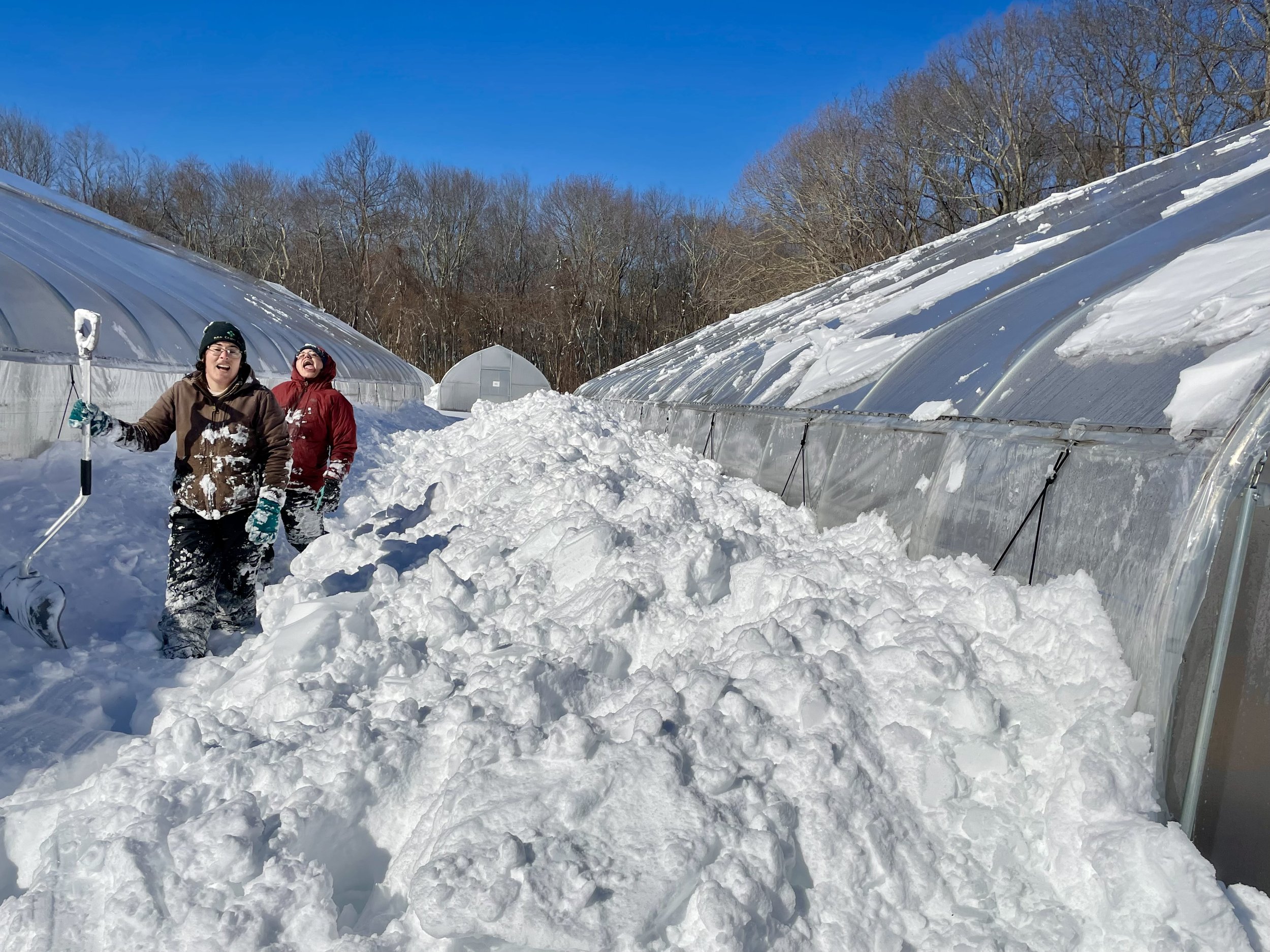
… and after! Mission complete!
Despite the stubbornly wintery weather, the days are getting longer, the seedlings are growing, and we are doggedly preparing for spring. Looking forward to sharing flowers and vegetables with you again soon!
-Kiersten
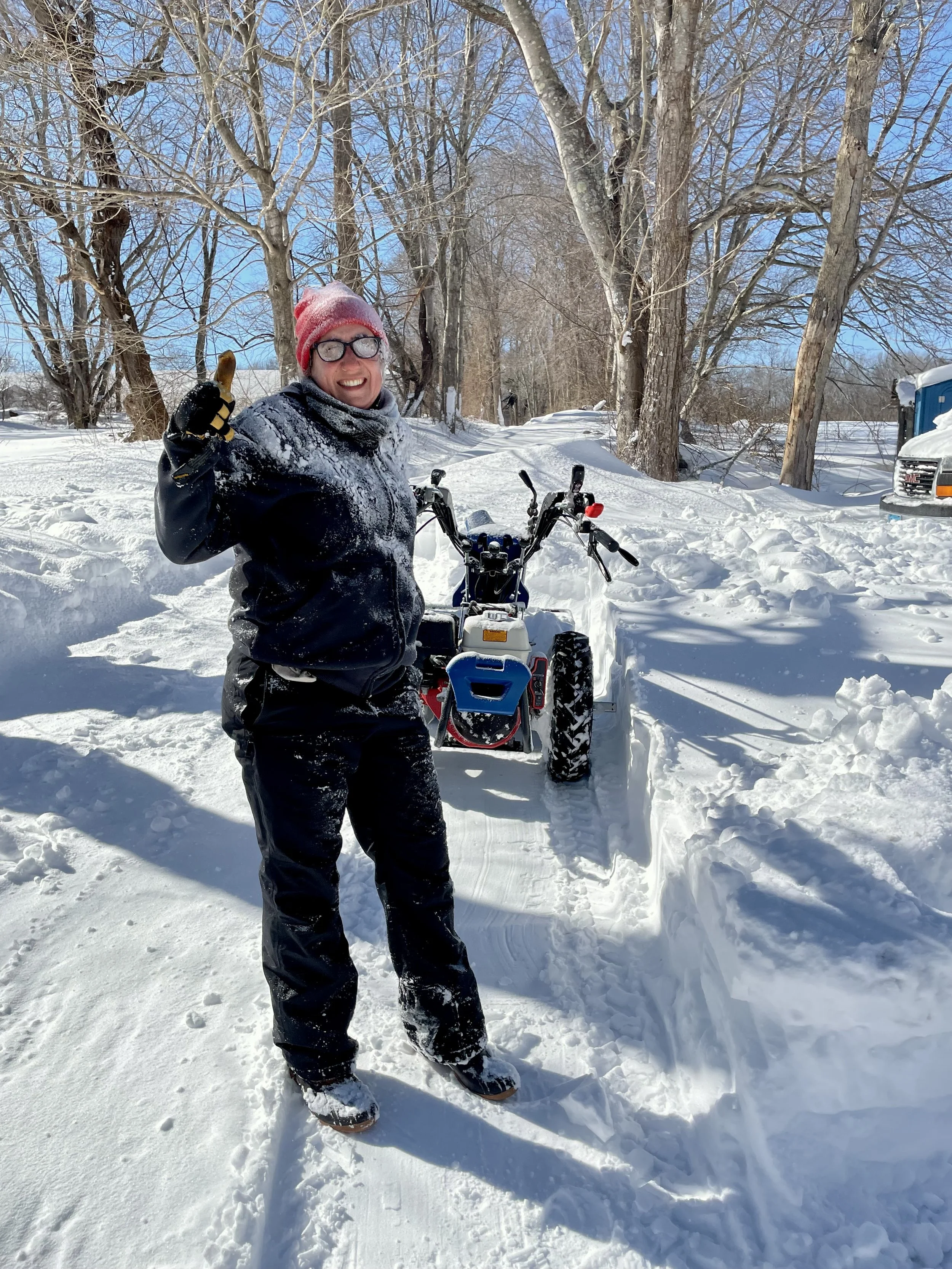
Elise, the intrepid snowblower!