All the way back in the March 2024 blog post, Caitlin jumped back into the blog writer’s seat and explained how the work of the FRFarmers has expanded beyond the boundaries of the farm. Through years of community building in the regional agriculture space, we’ve all found ways in which our skills and knowledge can be put to work in other ways, including founding new businesses, educating and supporting beginning farmers, and participating in advocacy and policy work.
Caitlin is no exception. And now it’s time for this blog writer to brag about her a little bit. Last year, Caitlin founded Midcourse Design & Development - an interdisciplinary studio dedicated to designing and developing regional-scale food infrastructure in New England and beyond. She is working to rebuild the processing hubs, aggregators, mills, storage, and markets that are critical for regional food economies.
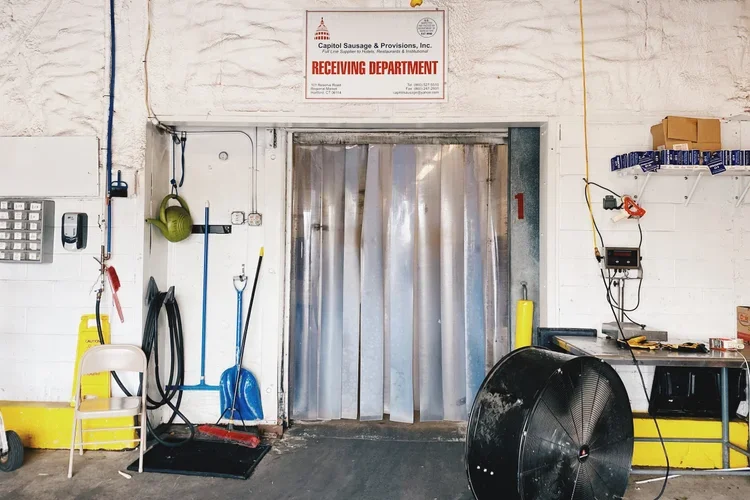
Caitlin is an architect, and has long focused on the role that architecture and good design can play in transforming our food systems. As she worked for years on building projects in the food world, she recognized that our food system has structures built to support global, industrial agriculture as well as structures to support farmers’ markets and other hyper-local methods of growing and distributing food. However, in between, there is virtually no purpose-built infrastructure. Without this middle-scale infrastructure in place, it’s difficult or impossible to scale the work of our local producers. If our local farmer can’t scale to meet our needs, we’re forced to rely on the industrial system where food is disassociated and disconnected from its source - grocery stores where produce has been shipped from states if not countries away, slaughterhouses whose activities we keep way out-of-sight and therefore out-of-mind, and processing facilities that only make economic sense for super, large-scale producers to access. There’s nothing in the middle.
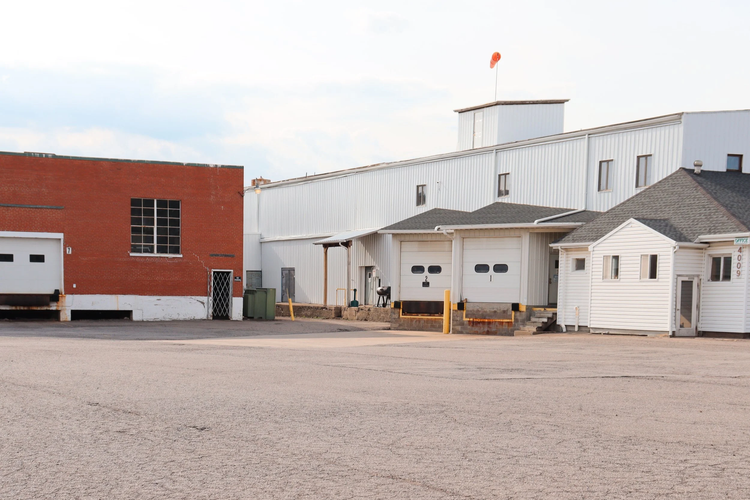
This is a real issue for many farmers. We’re great at feeding our local community through CSAs, farmers’ markets, and independent grocery stores. On our own though, individual farms cannot service our school systems or our regional grocery store chains. We simply can’t produce enough food to even start a conversation with them. If we want to scale our reach, we need to band together with other farmers and producers. However, managing aggregation and coordination like that requires a dedicated workforce, time, funds, not to mention innovative infrastructure that is actually designed to connect local and regional dots. Farmers don’t typically have an abundance of any of those assets.
Midcourse is providing essential support to the people working in this messy middle of our food system. Caitlin is bringing architecture, operations, and capital planning expertise to food hubs, processors, and packers. A handful of her current projects include:
Hartford Hub: Midcourse has partnered with the Keney Park Sustainability Project to develop a regional-scale produce aggregation and processing hub in the North End neighborhood of Hartford. The Hub will support small- and mid-sized farms in accessing institutional customers for their products.
Breadtree Farms: Midcourse is supporting Breadtree in designing and constructing the largest chestnut processing facility in North America on their home farm in Salem, New York. The facility will support a renewed industry for chestnut growers in the northeast.
Brooklyn Packers: Midcourse is collaborating with Brooklyn Packers to design a cold storage, packing, and retail space in Bed Stuy that supports community food access and cooperative logistics.
By expanding this midscale infrastructure and designing it in an equitable and resilient way, we can create a regional food system in New England that feeds quality, locally-produced food to more people and reduces reliance on global, industrial agriculture.
But, you don’t have to take my word for it. You can read Caitlin’s own words, and those of her business partner, Amy Mielke, in a recent interview with the Yale School of Architecture magazine Constructs (Caitlin is also currently an Assistant Visiting Professor at Yale). She describes this work more succinctly and beautifully than I ever could.
As 2025 comes to a close, all of us at Four Root Farm have big dreams about where the next year can take us. We might not radically transform the food system in the next 365 days, but you can be sure we’ll try!
-Kiersten